Wednesday, 23 June 2010

Sanaigmore


Yesterday I went a walk with my parents at Sanaigmore. We walked north towards Ardnave, although we didn't get very far as there was just so much to stop and admire en route. Like Malcolm, we saw many dragonflies and noted how they all went crazy as soon as the sun came out and, whenever the sun disappeared behind a cloud, so did the dragonflies! They, like us, need the vitamin D for energy.

It was a great walk and we were thrilled to see the Marsh Fritillary at last, though looking quite worn at the end of its flight period. We also saw large numbers of Small Heath and Common Blue, a Dark Green Fritillary and mum spotted the first Meadow Browns of the year.

Just as I announced that this was ideal territory for adders and my mum went 'oooh!' (not in a good way!), my dad cried out (in a whisper) 'There's one!' and we watched as it slithered away to safety in the heather. It had gone before I had chance to take a photo and before mum had a chance to see it at all, although, wearing only sandals, she wasn't too bothered about missing it!

It was mum that spotted the otter later on. It just took a peep at us before the Oystercatcher, the reliable sentinel, announced our arrival and it was gone forever. They must be able to hold their breath for ages as, despite watching for ages, we didn't see it again.

The area is awash with yellow at the moment and this is the Biting Stonecrop (Sedum acre), also known as Wall-Pepper from its peppery-tasting yellowish-green leaves. Superstition claims that, if planted on the roof of a house, the Biting Stonecrop will ward off a thunderstorm and, like many plants, it was considered an excellent medicine in days gone by.

I was also delighted to see the beautiful, delicate Burnet Rose.

Becky

sunrise


4am bruichladdich
george

Lesser Black Back Gull at Shorefield


This bird first visited the garden in 2005 - and has returned every year since. He (or she) has become almost tame - standing on the wall just two metres from our door waiting to be fed.
George and Megan

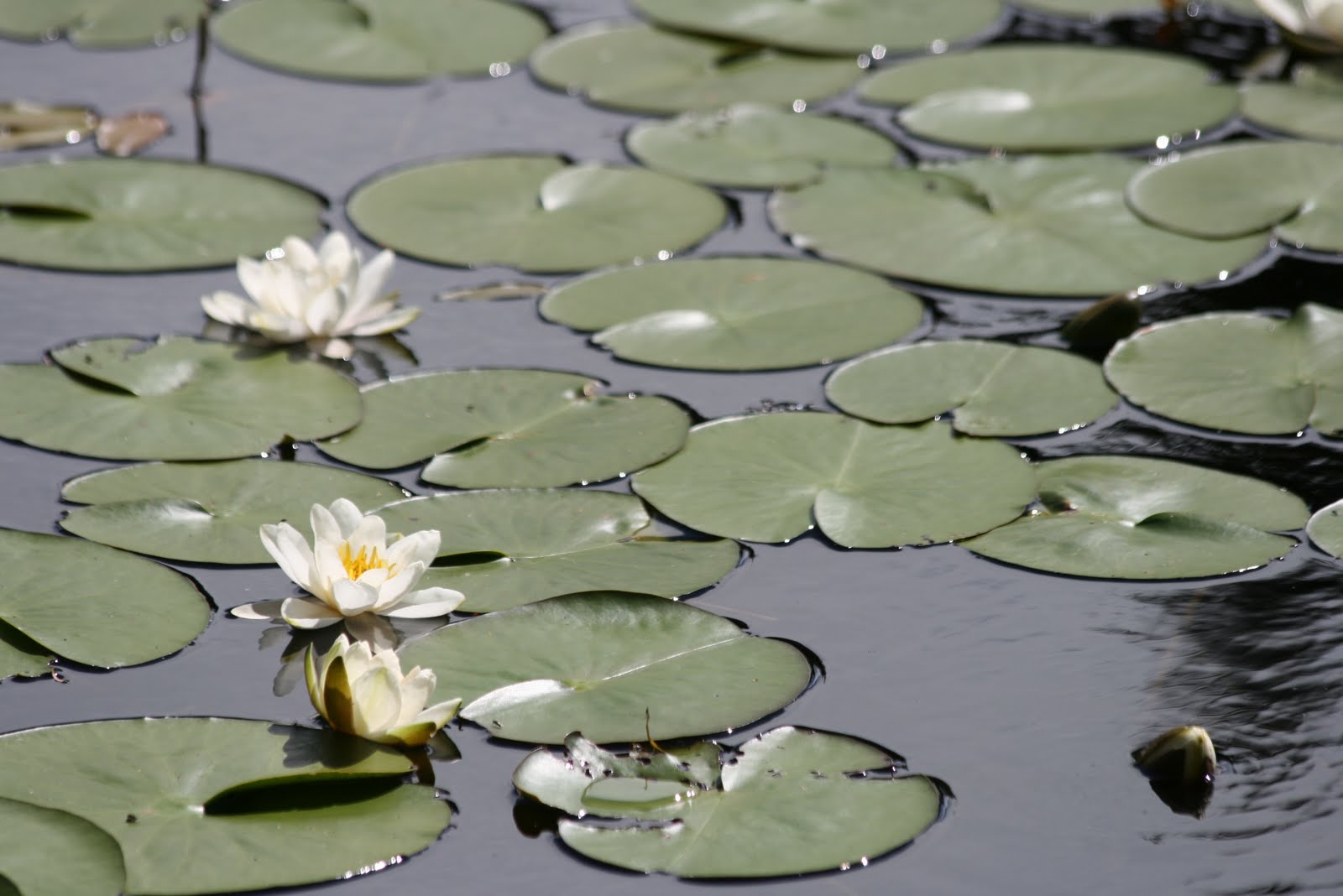
Lily Loch


We were out for a walk near Port Askaig and came across the aptly named Lily Loch large areas of which were covered by water lilies
George and Megan

Dragonflies


Out walking yesterday, I saw both of the two kinds of large dragonfly which occur on Islay, the Golden-ringed and the Common Aeshna. The former has a handy habit, for would-be photographers, of patrolling a territory and, within that, tending to land in more or less the same places each time it passes them - so in theory you just have to stand and wait. We have several species of the smaller darters and damselflies, but if you see something 55-65 mm (2 or more inches) long, then it will one of these two - until something new turns up!

Malcolm

Swallows at Lorgba


A few years ago we had cause to replace the door to the sort of shed area beneath the steps that lead up to our front door at Lorgba. Swallows had nested in the interior and had been accommodated by our leaving the door open during the summer months, but this was not exactly the perfect arrangement for various reasons. So when the time came for a new door we had one made that left a gap at the top - a sort of swallow access hatch - and that has done the trick quite nicely.
Our pair were late arriving this year, and then even later in building a nest, but they have eventually done so, albeit not in their usual place. They have shifted the nest site from behind the cold water pipe above the door to behind some dodgy old ceiling insulation - which is much more difficult to photograph. The adults sit on the wall at the top of the steps, which is handy for shots however (although this one is from a few years back). No sign of any youngsters yet this year, but the activity rate is high, as are our hopes....
Carl

Tuesday, 22 June 2010

Owl update...


The picture above is taken from the INHT Barn Owl Webcam

On the right is the female owl, the giant ball of fluff on the left is her one chick for this summer. In front of them, the 3 remaining infertile eggs from this brood are clearly visible. The single chick hatched about 2 weeks ago, so should be fledging sometime around the end of July. It has a good supply of food, and as it is uncontested, is growing very rapidly.

More moths


The interest of moth-trapping and discovering what species occur on Islay is made even more pleasurable by the delightful names which some of them are called. Here are True Lover's Knot, Map-winged Swift and Heart and Dart.

Malcolm

Ferry Journey


It was a perfect evening for the crossing and we left Kennacraig on the 18.00 departure in virtually flat calm with only a few patches of breeze to ruffle small sections of a mostly glassy sea. Visibiliity was excellent but it was actually quite quiet with just the usual groups of Guillemots with a few Razorbills to keep the scattered Kittiwakes and Gannets company. I saw two small groups of manx shearwaters. There were a few terns and a total of five porpoises were spotted, mostly very distant with only one really close to the boat. Sadly no larter cetaceans or Basking sharks.
There were a lot of Lions mane jellyfish (Cyenea capillata). These are the big brown jobs with enormously long trailing tentacles that deliver a sting akin to a nettle. Being stung by these tentacles as they whip around the haulers is an occupational hazard for creel fishermen as I remember well. Bad news if you get one in the eye, but the sting subsides after about half an hour and they dont do lasting damage.
There were plenty of red deer in evidence on the hills of both Islay and Jura as we steamed up the Sound towards Port Askaig and there were numbers of (presumably) Common seals hauled out on the shore of Am Fraoch Eilean.
Carl

Picture of jellyfish from Wikipedia

Monday, 21 June 2010

Osprey at Kennacraig

Am on the ferry watching an osprey hunting along the shore at Kennacraig
Carl
Sent from my BlackBerry® wireless device

Bottle-nosed Dolphins

Jane Dawson spotted a pod of three Bottle-nosed Dolphins travelling up Loch Indaal yesterday, starting from Wester Ellister. That's good news as we haven't had many reported sightings yet this year.

Becky

Saturday, 19 June 2010

A couple more aerial photos


Here are Bridgend and Beinn Bheigeir.

The area of Bridgend Woods closest to the shore, around the head of the loch, was first planted in the 1850s, to give shelter, to provide sport (Woodcock and Roe Deer) and as an amenity - hence the carriage rides running through the woods, out to and beyond the Wool Mill. All that woodland is part of a designed landscape recognised as such by Historic Scotland. The plantations to the west (Winter Covert) and around Loch Skerrols came later. In the foreground is Loch Tallant, with its extensive reedbed running to the right of the water, while above it is Tallant Wood, a very nice piece of woodland in which oak trees predominate.

Beinn Bheigeir is Islay's highest hill (460 m). The highest point is on the left-hand ridge, but the broader right-hand ridge is nearly as high (456 m). Nearly 20 years ago, I found a pair of Ring Ousels breeding in the scree slopes of this hill (the first breeding record for Islay). A few more pairs were found later on adjacent hills. It was good to learn from the RAF Ornithological Society who visited this area in 2009 specifically to look for Ring Ousels, that they were still there.

For those new to blogs, if you click on a photograph you will get a much larger image. Well worth doing with these aerial shots.


Malcolm

Lunar Thorn moth - new to Islay!


Also in my catch last night was a moth I hadn't caught before. It was about 22 mm (just under an inch) in wingspan. It turns out, after some checking, that it has never been recorded from Islay before. It is quite widespread on the mainland, and there is a 50-year-old record from Colonsay, but no-one has previously reported it here. It can be separated from the Early Thorn, for which there are several Islay records, both by the very scalloped edges to the wings and because at rest it holds its wings in a steep 'V' as shown in one of the photos. The Early Thorn closes its wings completely when at rest.

As its foodplants are a wide range of common broadleaved trees and shrubs, there's no obvious reason for it not being here. What its appearance really confirms is that Islay's moths have been very little studied over the years, though that situation is slowly improving.

Malcolm

Poplar Hawkmoth


I caught this beauty last night in the garden. They are probably the commonest hawkmoth on Islay, with Elephant running it a close second.

Malcolm

Friday, 18 June 2010

Beinn Uraraidh


Last Tuesday morning, when Becky was preparing herself for the long slog up to the summit of this hill, I had a look at it the easy way, from the air, as the 'plane flew past it in good weather and I had my camera with me, and had made sure I was in one of the few seats on the plane with a good view - not obstructed by engine or wing. So here are two views of the hill, both from the south-west, showing the bare rock of the summit, and of adjacent hills. The large loch in the foreground of the lower photo is called Loch Beinn Uraraidh. I only got back this morning and have a few more aerial photos I may post in a day or two.
The following is history rather than natural history. The aircraft wreckage which Becky mentions is of a Bristol Beaufighter. A squadron of them was based at the airport during the second world war. Two of them crashed within minutes of each other on 12th September 1943. Both were engaged on night training flights. One crashed very close to the airport almost immediately followed by the one Becky saw, the pilot of which it is thought may have been distracted by the first crash and failed to clear the rising ground to the east of the airport. Sadly, there were no survivors.
Malcolm

Thursday, 17 June 2010

Six-Spot Burnet Moth


A couple of visitors to the Centre on Tuesday reported seeing a Six-Spot Burnet Moth down at Claddach, near Portnahaven. Today we received this photo from Gordon Yates, of the same species perched on a rare Meadow Thistle. These moths fly from June - August, so hopefully we'll get plenty more sightings before the summer is out.

Tuesday, 15 June 2010

Thrift on Beinn Uraraidh


What a wonderful walk past lots of peat cuttings, fishermen, lochans and plane wreckage to the summit of this beautiful mountain. OK, so it's not as beautiful (in my view) as the unnamed mountain south-west of Beinn Uraraidh, but there are fantastic views from up here.

As well as the usual Tormentil, Lousewort, Milkwort, Heather and Cotton Grass found in this terrain, I was very surprised to see patches of Thrift growing up here. Perhaps blown up from the east coast of the island?

Becky

Lazy summer afternoons...


The two most frequently asked questions here at the Natural History Centre are

i) How do I work this coffee machine?
ii) Where can I see an otter?

There are no simple answers to either question, both involve a lot of patience, and a fair bit of luck. For those of you who are yet to see an otter here, here's proof that they are about, courtesy of another great picture sent in by visiting INHT member and wildlife photographer Gordon Yates. Thanks Gordon!

Mark

Monday, 14 June 2010

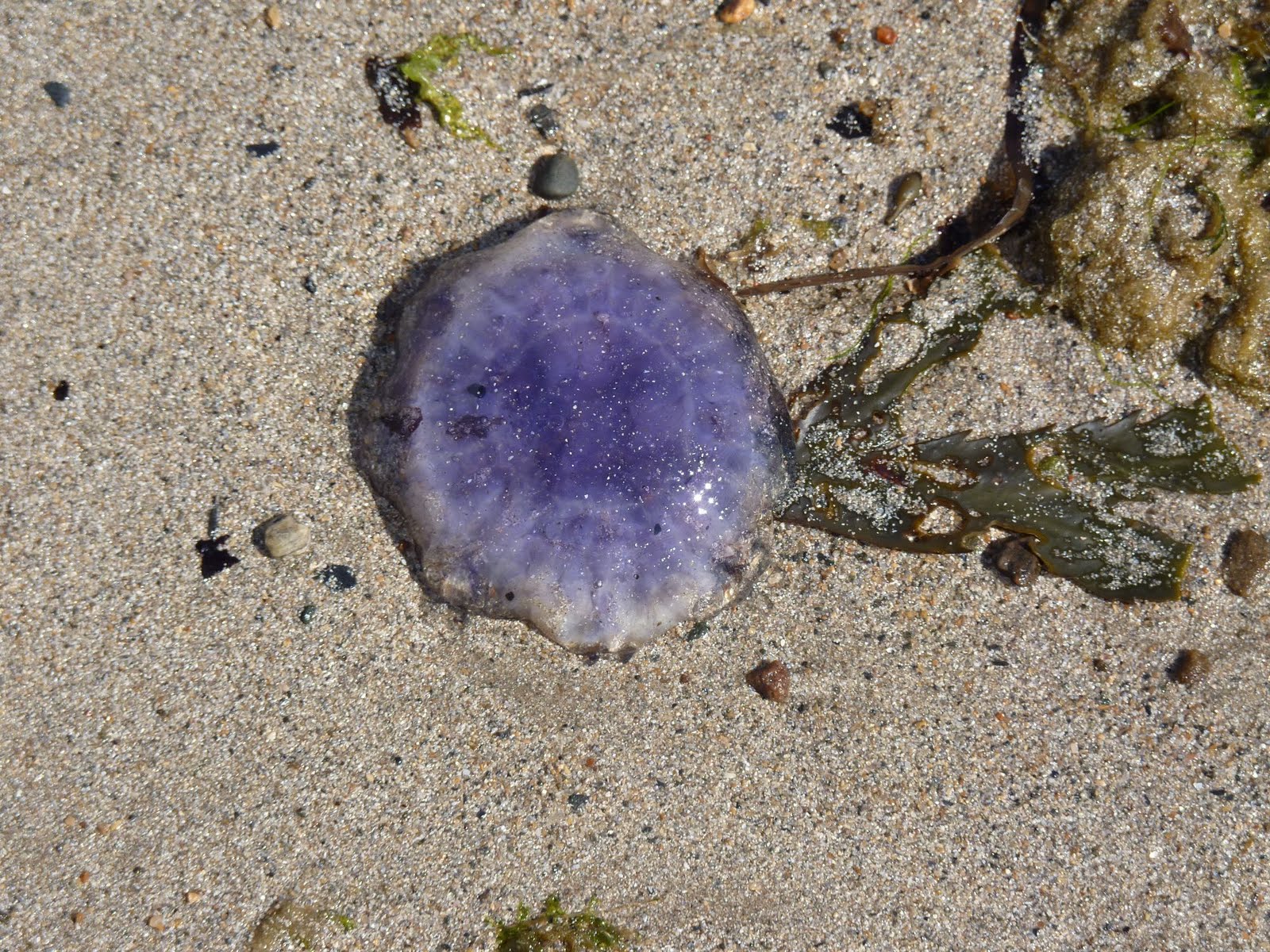
Moon Jellyfish (Aurelia aurita)


It's jellyfish swarming time and when I walked down to the beach just by the Centre this morning, there were a few specimens washed up, one in particular looked very beautiful and worthy of a photo.

I have to confess I don't know much about jellyfish, but Malcolm identified it for me and here's what I subsequently found out:

1) Moon jellyfish is one of the aurelia genus, of which there are more than ten, very closely related species.
2) Moon jellyfish is also called Common or Saucer Jellyfish.
3) Although they can sting small swimming animals, their tiny harpoon like sting is not powerful enough to pierce a human's skin - hurray! (although I wouldn't go testing this just to prove me wrong!)
4) They mainly feed on plankton.
5) They are not great swimmers and are largely at the mercy of tides and currents, which is why we sometimes get stranded jellyfish.
6) Jellyfish swarms occur unintentionally and are due to good (plankton) feeding conditions resulting in lots of baby fellyfish being born at the same time and drifting around together almost totally at the mercy of tides, currents and the wind.
7) The moon jellyfish is identified by its four horseshoe-shaped rings (called gonads) which are visible through its bell.

For more info, visit http://www.glaucus.org.uk/Moonjell.htm

Becky

Saturday, 12 June 2010

Barn owl chick (or chicks?)


The accompanying screengrab, taken a few minutes ago at 1.31 pm, certainly shows 1 chick, but does it show 3 eggs or 2 eggs and another, tiny, chick. I'm not sure!
Malcolm