Friday, 28 October 2011

Hector lands a fine Sorn Salmon

Watched by his sister Emily, Hector Inglis hooked his first salmon while fishing the picturesque lower Sorn near Bridgend yesterday.

After an exciting struggle lasting around 15 minutes the fish was finally netted by Hector's father Willy, prompting a quick celebratory text to alert the world...

The fish was a handsome cock salmon of 4 to five pounds in weight.  It was well coloured, indicating that it had been in the river for a week or more.  Fresh run salmon are silver.

Willy informed me that it has been an excellent salmon fishing season, probably because of the high levels of rainfall.  The Sorn, like Islay's other salmon river the Laggan, are spate rivers, with the fish only running when the water is high enough . 
Islay Estates have a catch and release policy, with over 90% of fish returned to the water.  This handsome fellow lived to fight another day and hopefully beget more of his kind.

Thursday, 27 October 2011

Coprinus comatus, the shaggy ink cap, lawyer's wig, or shaggy mane


On the footpath alongside the road through Bridgend Woods today.
Carl

Keppols to Bunnahabhain

Fiona MacGillivray and I went for a long walk today. We were celebrating the long-awaited return of that warm, yellow ball in the sky. It made a welcome appearance yesterday to remind us what it looked like and today it teased the cumulus clouds (yes, I know you've all missed my cloud naming!), casting wonderful shadows and fantastic light on the autumnal colours of our landscape which I have so missed in recent weeks. We breathed in deeply of this rich air for, I don't want to depress you, but . . . . well, let's just make the most of it while it lasts!

We saw some fantastic things, starting with an otter which disappeared into the grass next to a passing place which we pulled into to allow a huge lorry to pass (we might not otherwise have seen it). We also saw male and female Bullfinches from the same passing place. Other highlights include Barn Owl at Staoisha Eararach and Crossbill in that woodland and male Blackcap near the military bridge at Bunnahabhain. Here's our list:

Buzzard, Kestrel, Raven, Hooded Crow, Blackbird, Dunnock, Coal Tit, Goldcrest, Blackcap, Rock Dove, Song Thrush, Barn Owl, Crossbill, Pheasant, Bullfinch, Goldfinch, Meadow Pipit, Barnacle Goose, White-fronted Goose

Lots of fungi and lichen

Otter, Red Deer

Fox Moth Caterpillars (galore!)

Two fenceposts which caught my eye

Becky

Tuesday, 25 October 2011

Record Wildlife on Islay, Jura and Colonsay

While many of the different kinds of the abundant and varied wildlife of Islay, Jura and Colonsay are well recorded - as a look at our online database will confirm - just as many are poorly recorded, including some of the commoner species of birds. Thus, we have over 50% more records for Golden Eagle than we do for Robin!
In order to improve the recording of the commoner small birds, as well as some other groups that are relatively easy to see and identify, the INHT, with a gratefully acknowledged grant from SNH, have published this new (free) 12-page booklet, which is being distributed in shops, schools and other outlets around the islands. It includes colour photos and brief descriptions of the small birds of gardens, farmland and woods, as well as all the mammals, reptiles, amphibians, butterflies and dragonflies that you are likely to see on Islay, Jura and Colonsay. It also includes a form for you to fill in and send us your records; further forms can be downloaded from the database website.
Below are a couple of pages from the booklet. You can download the whole booklet as a PDF file by clicking on the header "Download Recording Wildlife booklet" at the top of the page.
Becky and Malcolm

Monday, 24 October 2011

Saturday, 22 October 2011

Fairy ring


This was growing in the grass close to the shore near Glenburn today. It is quite small, not much more than a metre across, and made up of small fungi. I'm not sure which species, but probably a Clitocybe. Perhaps Carl can identify it - he borrowed my best fungi book quite a while ago!!
Malcolm

Pectoral Sandpiper - Mick Durham

Thanks to Mick for this shot of a Pectoral Sandpiper taken a few weeks ago, at Gruinart I believe.
Carl

Wednesday, 19 October 2011

From Islay to the Masai Mara - tonight's talk

A reminder about tonight's talk by Nigel Pope and John Aitchison! Should be great. 7.30 pm at the Visitor Centre.

Tuesday, 18 October 2011

Frogs in the Garden

It's been simply ages since my last post and I'm back from Cape Clear, Sanday (Orkney) and Dunkeld. The most exciting wildlife-wise was Dunkeld with Red Squirrels and Salmon leaping (both were in fact leaping). I was amazed to see Chough on Cape Clear (SW Ireland - home from home), but disappointed not to see anything different. Same with Sanday.

Anyway, Richard Russell sent us this photo of one of his garden residents. Thanks Richard!

Becky

Aeshna juncea - - The Common Hawker by Kate Hannett


Stunning photograph of a Common Hawker by Kate.  Many thanks....

Monday, 17 October 2011

Loch Indaal Yesterday


Donegal from the High Road yesterday evening

Carraig Fhada Lighthouse - The Oa


Could not resist posting these shots of Carraig Fhada lighthouse guarding the entrance to Kilnaughton Bay and Port Ellen.  Perhaps one of Islay's prettiest, and most photographed, buildings...
Carl

Hooded Crows - Kilnaughton

Hooded Crows are usually extremely wary, but this pair on the rocks of Kilnaughton Bay near Port Ellen were obliging enough to allow this picture to be taken with a point and shoot camera - which shows how close they were....
Carl

Shorefield Cattle

The Shorefield bullocks have come on well over the summer.

Highland Beef from the Shorefield Project

Sunday, 16 October 2011

Barnacle Geese at the head of Loch Indaal

Geese at Sunderland farm

Wild geese feeding on stubble below Rock Mountain.  The birds to the right are Greylags, to the left mostly Barnacle while the ones at the rear are Greenland Whitefronts.

Loch Gorm from Rock Mountain yesterday.  I think the island in the loch is a crannog, i.e. man made, probably during the Iron Age.

Whooper Swans at Rockside

The big flock of Whooper Swans is still gracing the stubble fields at Rockside.  It will be interesting to see how long they stay before moving on to their traditional winter destinations in Ireland.

Saturday, 15 October 2011

Big Funghi - any ideas?

On the roadside verge near Sunderland farm today.  There were two of them.  No idea what they are.  Does anybody know?
Carl

Friday, 14 October 2011

Whooper swans killed by overhead wires


Louse Muir of the RSPB on Islay is seen with one of two young Whooper swans that were killed yesterday following collisions with overhead wires on Sunderland Farm.  Power companies have installed high visibility discs on their cables in some areas that are particularly susceptible.  On Islay, that should probably mean eveywhere that cables cross open fields. 
Reducing the number of collisions ought to make commercial, as well as ethical, sense because wires are quite often brought down.  This can cause significant power outages which are of course, very expensive to fix.
Carl

Rare Pygmy Sperm Whale strands on Seil Island


A pygmy sperm whale, a very rarely sighted cetacean in UK waters, has stranded near Ellenabeich on the Isle of Seil, south of Oban, prompting scientists from the Scottish Agricultural College (SAC) to investigate. Pygmy sperm whales are rarely sighted and identified alive at sea, and therefore studying the carcass allows scientists to find out more about this elusive species. Since the Natural History Museum started keeping records of stranded cetaceans in 1913, only ten pygmy sperm whales are known to have stranded in the UK previously; three of which were in Scotland, the first reported in 1999. The stranding was spotted on 6th October by Brien and Liz Dickey, who informed John Gordon, a deep-sea fish biologist who is an Honorary Research Fellow at the Scottish Association of Marine Sciences (SAMS) in Oban. He in turn contacted Nienke van Geel, a PhD student at SAMS studying cetaceans on the west coast, who next day made the positive identification and contacted SAC. “We were all astonished, that what at first was reported as a porpoise or dolphin, turned out to be such a rare specimen”. With help from staff from the local Seafari boat operator the whale was removed from the beach ready for collection by SAC. Easdale ferryman, Alan MacFadyen, added, “For my part it was a sad sight to see and thankfully rare. It looked beat up, with surface wounds but no major wounds. It attracted quite a crowd. Seems to have been a few whales spotted about the west coast lately.”

A necropsy, an animal autopsy, was conducted by Andrew Brownlow at SAC’s base in Inverness and preliminary results suggest that the whale, a sub-adult male, was in healthy condition; the blubber layer seemed to be of good thickness; there were hardly any parasites found in the stomach and lung, in fact the whale had been eating shortly before being beached as there was still an undigested squid in the stomach. Results from the necropsy indicated that the animal would have stranded alive. Nienke, who attended the necropsy, said, “It is unknown what caused the animal to strand. Although we are still waiting on histology results, all signs point to a healthy individual.”

Pygmy sperm whales share some common traits with their cousin, the sperm whales; they too have a spermaceti organ in their heads, allowing for echolocation and aiding deep dives to hunt. The main difference is the size; while sperm whales can reach lengths of 18 metres, pygmy sperm whales will reach a maximum of 3.5 metres. Olivia Harries, Biodiversity Officer at HWDT (The Hebridean Whale and Dolphin Trust), commented, “To put the size of the pygmy sperm whale in context; the individual that stranded on Seil weighed about 150kg, the heart of the fin whale that stranded in South Uist weighed about 130kg.”Pygmy sperm whales favour continental shelf and slope regions and deep water so it’s rare to find this species in inshore waters. Their range stretches as far south as New Zealand, whilst Scottish waters represent the most northerly limit of its distribution.

SAC coordinates the Scottish Marine Animal Stranding Scheme with support from DEFRA and Marine Scotland. If you find a stranded animal that has perished please contact SAC on 01463 243030. Moreover, if you find a stranded animal that’s still alive, please contact the British Divers Marine Life Rescue (BDMRL) on 01825 765546. BDMLR are fully equipped to attempt re-float stranded animals, please note that you should never approach a stranded animal without proper training. Sandra Koetter, HWDT’s Sightings Officer, adds, “While it’s sad to find marine mammals on the shore, either alive or dead, by reporting the find you can help to discover more about the species and also what might have caused its death.” This report follows a spate of recent unusual strandings and sightings; a sighting of a live sperm whale in the Sound of Raasay, the fin whale that washed ashore on South Uist and more recently a live sperm whale in Kirkwall Bay (Orkney) and a dwarf sperm whale off Penzance, which might be the first live record of this species in UK waters. If you spot a cetacean, in its natural environment at sea, please report it to HWDT online at

http://www.hwdt.org/

Thursday, 13 October 2011

298 Whooper Swans on the Rhinns


I counted a total of 298 Whooper swans (Cygnus cygnus) between Rockside and Sunderland Farms on the Rhinns this afternoon.  201 were in a big flock on the half-cut barley field at Sunderland (top photo) and 97 on stubble at Rockside.
Carl

Big Battalions of Barnacle Geese


You may be subjected to a number of snaps of the Big Battalions over the next while.  I can't resist taking them...  These were over Loch Indaal earlier today...
Carl

Wednesday, 12 October 2011

Otters - Mick Durham


Two wonderful shots of Islay otters taken by Mick Durham who gave such an excellent presentation last month.  Many thanks Mick...

More of his shots can be enjoyed at....

http://www.wildlife-photographer.net/

Arrival of the Barnacle Geese


Three snaps of just a small proportion of the big flocks of Barnacle Geese that have arrived on Islay from their migration staging post on Iceland over the past two days.  Around 25,000 are here now, with the majority on the reserve at Gruinart, but also good numbers at the head of Loch Indaal (pictured).
Carl

Tuesday, 11 October 2011

Bronze Age Standing Stone - Grimsay on the Rhinns


This was photographed a couple of weeks back after a wet walk across very boggy ground to the abandoned clearance village of Grimsay northe west of the Gearach Loch on the Rhinns.  I had not visited it for a number of years, the last time being during the Spring.  This time the bracken and grasses were much longer - and I had the impression that the willow scrub had spread significantly since my previous visit.  This may, (or may not!) reflect a change in the land use in recent years with less intensive grazing by sheep.
Carl

Wildlife film makers Nigel Pope and John Aitchison to give talk at Centre


Producer Nigel and cameraman John have been filming on Islay for their latest BBC Scotland commission entitled - 'Hebrides - Scotland's Islands on the Edge of the World'.  We are delighted that these well-known professionals have found the time in their busy schedules to come to the Centre to tell us some of the stories from behind the cameras, and show us some extracts from their work.

Monday, 10 October 2011

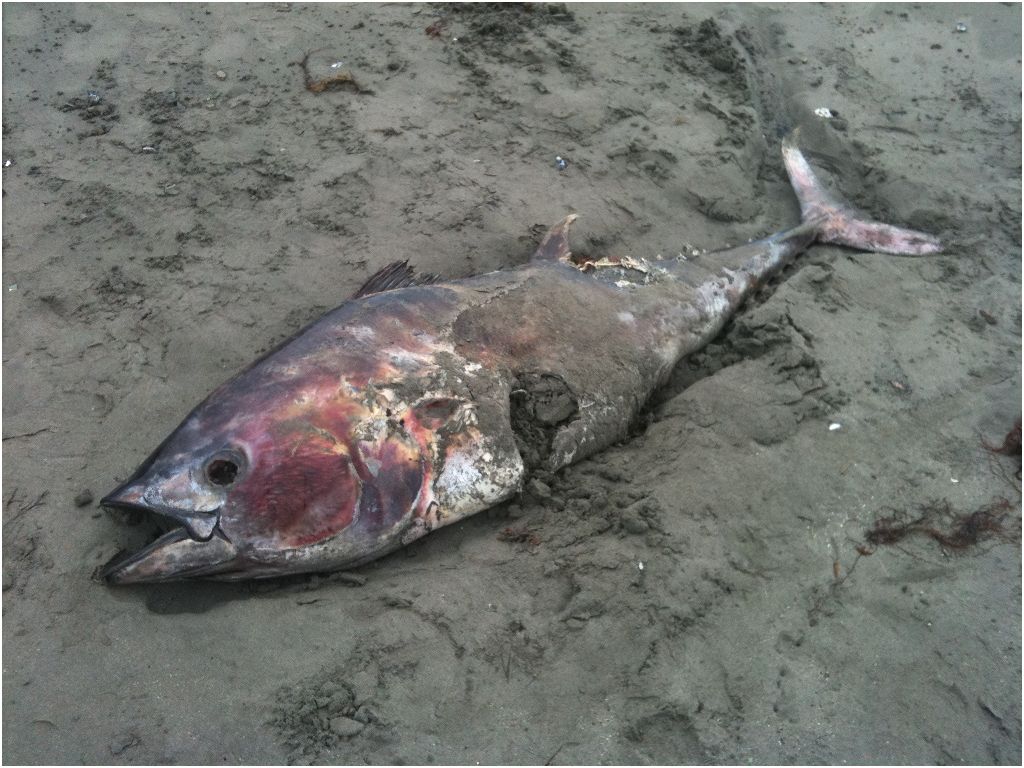
Tuna washes ashore on Mull - Hebridean Whale and Dolphin Trust


A report of a rare sighting prompted an investigation after a tuna was spotted on the shore of Laggan Sands, Isle of Mull. The Hebridean Whale and Dolphin Trust (HWDT) were notified of by the unusual find and set off for Lochbuie. Morven Summers, Volunteer Coordinator at HWDT, said, “We were a wee bit dubious at first and thought that the reporter may have mistaken a porpoise, however when we arrived at Laggan Sands we were shocked to see the huge fish on the shore.” It’s believed that the fish is a bluefin tuna; a large, torpedo-shaped fish that can travel at speeds of up to 43 miles per hour and weighs, on average, 550 lbs, although much larger specimens are not uncommon. The Mull tuna measured 1.8 metres long. Brain Swinbanks, Chairman of the Tobermory Harbour Association, added, “Seeing the fish up close was fantastic, I would guess that the ’mull tuna’ weighed about 150 lbs.”

Atlantic bluefin tuna spawn in the Mediterranean Sea, however they are highly migratory and tagged individuals have been tracked swimming from North American to European waters several times a year.

Although not many consider the waters off the west coast of Scotland to play host to such a fish, historically tuna did frequent these waters. Dr. Clive Fox, from the Scottish Association of Marine Science in Oban, explains, “Bluefin tuna are rare in our waters but not unprecedented, indeed there used to be a commercial and sport fishery for them before the war.” In fact, evidence of bluefin tuna making an annual migration to UK waters goes back a few hundred years. Brain Swinbanks, Chairman of the Tobermory Harbour Association, added, “ The British rod and line record for Blue Fin Tuna is 851lbs caught in the North Sea in 1933 by Mr Mitchell-Henry fishing from a ship’s rowing boat 50 miles off shore and alongside the Herring Fleet. A decline in the stocks of herring resulted in a decline in migratory Tuna which originally came from the Mediterranean migrating all round the west coast of Scotland.” In September 1989, a 400lbs tuna was reported caught close to the Isle of Lewis.

Unfortunately the tuna carcass was too decomposed for full analysis, however the fish’s otoliths (ear bones) will be recovered and from these the age of the fish can be determined. If you find a stranded animal, HWDT would be very interested to learn about it. If researchers reach the carcass in good time then we can learn many things about the animal and why it may have perished. Please contact HWDT on 01688 302620 or email sightings@hwdt.org if you find anything on the shore.

Sunday, 9 October 2011

Not much happening!

Regular readers, of which we know we have many, will have noticed the paucity of posts of late. The main posters, Carl, Becky, Mark and myself, are either away (Becky, Carl), have just been away (me), or have left the island (Mark), resulting in the present drought. However, a drought is not what has been happening outside in the last few days with 32 mm of rain in the last 36 hours, and another 20 mm in the previous three days. That's over 2 inches in old money, and not only is the island saturated, but photography has been fairly pointless, too. Where I live in Bruichladdich I normally have a view across Loch Indaal to Bowmore. From Friday evening until mid-afternoon today (Sunday), Bowmore was invisible because of the thick mist enveloping the island. And even now, the hills are still shrouded.
So here's what my view is just now. Sunny Islay it is not!
Malcolm

Thursday, 6 October 2011

Conservation and nature tourism bring economic boost

The RSPB have just published an important new report showing how valuable conservation and nature tourism is to the economy.
Here are a few extracts from the press release accompanying the report:

More and more people are enjoying nature in the UK, bringing economic benefits to local communities.
These are the findings of a new study from the RSPB looking at how conservation and nature tourism create jobs and bring money into local areas. The effects are being felt across the UK, from far flung rural areas to urban fringes.

The RSPB’s 200 reserves now attract two million visits a year. They help bring £66million into their local communities, supporting 1,872 local jobs – an 87 per cent increase since 2002.
These findings complement the Government’s recent National Ecosystems Assessment (NEA) which highlighted the economic benefits conservation delivers through clean air and water, flood defence, carbon storage and wellbeing. The NEA shows that the natural environment is worth billions to our economy every year and conserving it makes sound economic sense.
The rare wildlife habitats that are protected on nature reserves are often found in some very remote places – so the benefits they bring to rural communities can be very important.

Research by Natural England shows that people travelling within England to enjoy nature increased by 10 per cent between 2005 and 2009, despite general tourism trips declining by 9 per cent in this period. The most recent figures showed nature tourism visits reached nearly 3 billion last year with visitors spending an estimated £20.4billion in the local area.
Similar research by Scottish Natural Heritage has revealed that nature-based tourism supports spending of £1.4 billion per year, and 39,000 jobs in Scotland.
Visits to RSPB reserves grew 38 per cent, from around 1.5 million to almost 2 million in the last five years. Over 1,000 local jobs were supported by tourism to RSPB reserves in 2009, three times the number that were supported in 2002.
Reintroductions of charismatic species can also be a big draw for nature tourism. The return of the once extinct white-tailed eagle to the Isles of Mull and Skye now supports more than 150 local jobs while the reintroduction of red kites to Dumfries and Galloway has brought 20 new jobs to the area.
As well as local businesses servicing tourists, like pubs, hotels and restaurants, nature reserves create direct jobs on reserves, support local industry in the construction of visitor facilities and habitat management, and play host to farming lets where cattle and sheep graze reserve land.

Tuesday, 4 October 2011

Swallows still here

But probably not for much longer if the northerly blast threatened for the next few days materialises.Still, seeing one today gives me an excuse to post this fantastic photograph of a swallow in flight taken by Gordon Langsbury.
Malcolm

Sunday, 2 October 2011

Fox Moth

The hairy caterpillars of this species are still around, feeding up before they descend into the ground vegetation and leaf litter to hibernate through the winter. They feed on a variety of plants including heather, bramble, bilberry and willows. This one which I photographed just now was close to 70mm long, which is about as large as they get. In the spring, they will feed some more before pupating and emerging as the adult moth. It isn't a particularly spectacular moth - not as brightly coloured as the caterpillar, anyway - and has a wingspan which is also about 70mm.
Malcolm

Saturday, 1 October 2011

Gordon Langsbury

Having returned from a week abroad, I would, as Carl thought, like to add a few words of tribute to Gordon. He first came to Islay in 1970 and, as so many people do, kept on returning, in his case at least once a year right up until two years ago, when he decided that the journey from Berkshire was too much for his wife, Joy, who was becoming increasingly infirm. I first met him in the mid-1980s, soon after moving here, and when the Natural History Trust moved into its present Centre in 1992 and we had a room where we could host public talks, Gordon became an annual fixture, never bothered about giving up an evening of his holiday. He used to lead birdwatching tours to many different parts of the world and also go on photography trips with other bird photographers at home and abroad. And each year he would transport us, his audience, to places such as Kenya, the Falklands, Texas, the Netherlands, Norway, Spain, Shetland, the Scillies, etc., etc. His outstanding bird photographs were always accompanied by scene-setting habitat shots, putting the birds in their context and so greatly adding to the interest and enjoyment of his talks.
One evening a few years ago, when he and Joy were having a meal with us, he happened to say: "You know, Malcolm, I've probably now photographed all the regular birds of Islay." And it was that casual remark, followed by the germ of an idea in my mind, that led to us getting together and publishing, in 2006, "The Birds of Islay - A Celebration in Photographs" containing about 170 of Gordon's photographs to which I added brief texts. Gordon eschewed nest photography, except very occasionally, so his photographs are of birds in their natural habitat, feeding, swimming, flying, etc.
Gordon retired from being, in his words, "a village bobby", early enough to have a second career as a professional photographer. Indeed, his careers overlapped, as he was elected a Fellow of the Royal Photographic Society back in 1978. His work has won many awards and has been widely published in magazines and books, and he was a familiar figure on the bird club lecture circuit. Many's the visiting birdwatcher to Islay who, on seeing the poster for his talk and having been to one of his talks in England, made sure that they came to hear him again. A most approachable and friendly man, he will be much missed by a large number of people including by his many friends here on Islay.
Malcolm