Monday, 29 July 2013

Ramble at Sanaigmore, 29th July 2013

All nine of us watched the grey cloud approach and I shook in my odd boots as it was the first time ever on a ramble that I hadn't brought a jacket. With everyone else prepared, however, we ventured forth into the heavy rain. Our ramble was curtailed but Ben spotted a Ringed Plover's nest just before we turned back and we were surprised that we hadn't been mobbed as a result. We quickly turned back round to enjoy a cup of hot chocolate at Outback Art and discuss our sightings in the warmth. Thanks to everyone for turning up and it was good to see Amory and Islay and their extended family back; they'd joined us for a ramble last year and decided to return for more rambling - even if it was in the rain!
Becky

BIRDS
Sand Martin, Swallow, Starling, Wren, Meadow Pipit, Redshank, Black Guillemot, Ringed Plover, Twite

INSECTS
Common Carder Bee, White-tailed Bumble Bee, Small Tortoiseshell

FLORA
Bird's-foot Trefoil, Meadow Buttercup, Silverweed, Monkey Flower, Water Forget-me-not, White Clover, Red Clover, Lady's Bedstraw, Daisy, Mouse-ear Chickweed, Common Hawkbit, Eyebright, Spear Thistle, Creeping Thistle, Lesser Burdock, Common Nettle, Common Ragwort, Field Gentian, Common Centaury, Self-heal, Wild Thyme, Pineapple Mayweed, Red Bartsia, Marsh Willowherb, Yorkshire Fog, Harebell, Yarrow, Thrift, Bog Pimpernel, Black Knapweed

Ringed Plover nest

Sunday, 28 July 2013

Overnight stay at Proaig

Proaig 'bothy'
Seven of us set off on Friday afternoon for the hike to the 'bothy' at Proaig. I have never stayed there before although I have visited several times before. Each of us carried our own supplies, including our two youngest members, Isi and Becca, both only 7 years of age. The clegs were worse than the midges by far and we were relieved to reach our destination after seeing an adder and lots of butterflies en route - Red Admiral, Dark Green Fritillary, Green-veined White, Ringlet, Meadow Brown and Common Blue - all in abundance. The birds were not so much in evidence, but we still saw Lesser Black-backed Gull, Starling, Rock Pipit, Reed Bunting, Twite, Redpoll, Shag, Red-breasted Merganser, Mute Swan, Pied Wagtail and Hen Harrier. We had a lovely stay, frying up lots of food and toasting marshmallows on the fire. Definitely to be recommended.
Becky

Becca with a Common Frog

Hoverfly Volucella bombylans

Isi and Becca at the start of the walk

Niall - fully laden!


Saturday, 27 July 2013

Common Footman

No, nothing to do with servants, but the name of a moth which I caught last night and which is only the third record for Islay, the first two being in 1983 and 1999. It's quite small, about 15-16 mm in length. Unusually, instead of feeding on vegetation, the caterpillars feed mostly on lichens and algae on trees, old walls, rocks, etc., so it ought flourish here rather than be apparently very scarce!
Malcolm


Monday, 22 July 2013

Nature ramble at Kilchiaran, 22nd July 2013

There were just two takers for today's ramble - another sunny one as well and full of butterfly life - perhaps the most ever species seen on any of our rambles. Despite 'Nettle City' we found very few caterpillars - why, I wonder, when this is the best bunch of nettles I can recall seeing on Islay? The highlight for today's couple though was the beautiful male Linnet which posed for quite a while. It was our Leicestershire's couple first ever Linnet and they were delighted.
Becky

BIRDS
Common Gull, Fulmar, Black Guillemot, Hooded Crow, Raven, Starling, Rock Pipit, Meadow Pipit, Linnet, Sand Martin, Common Sandpiper, Buzzard, Ringed Plover, Pied Wagtail, Oystercatcher, Rock Dove

FLORA
Bog Pimpernel, Water Mint, Marsh Bedstraw, Marsh Willowherb, Marsh Marigold (leaves), Flag Iris, Eyebright, Germander Speedwell, Water Forget-me-not, Mouse-ear Chickweed, Meadow Vetchling, Kidney Vetch, Wild Thyme, Thrift, Bracken, Common Nettle, Spear Thistle, Creeping Thistle, Lesser Spearwort, Red Bartsia, Harebell, Ragged Robin, Red Campion, White Clover, Red Clover, Lady's Bedstraw, Burdock, Hawkbit, Selfheal, Marsh Thistle, Yorkshire Fog, Tormentil, Daisy

INSECTS and INVERTEBRATES
Harvestman sp, micro moth sp, Red Admiral, Small Heath, Meadow Brown, Ringlet, Common Blue, Green-veined White, Small Tortoiseshell, Dark Green Fritillary
Harebells - my favourite flower

Harvestman sp - possibly Phalangium opilio male.

Nettle City - hunting for caterpillars

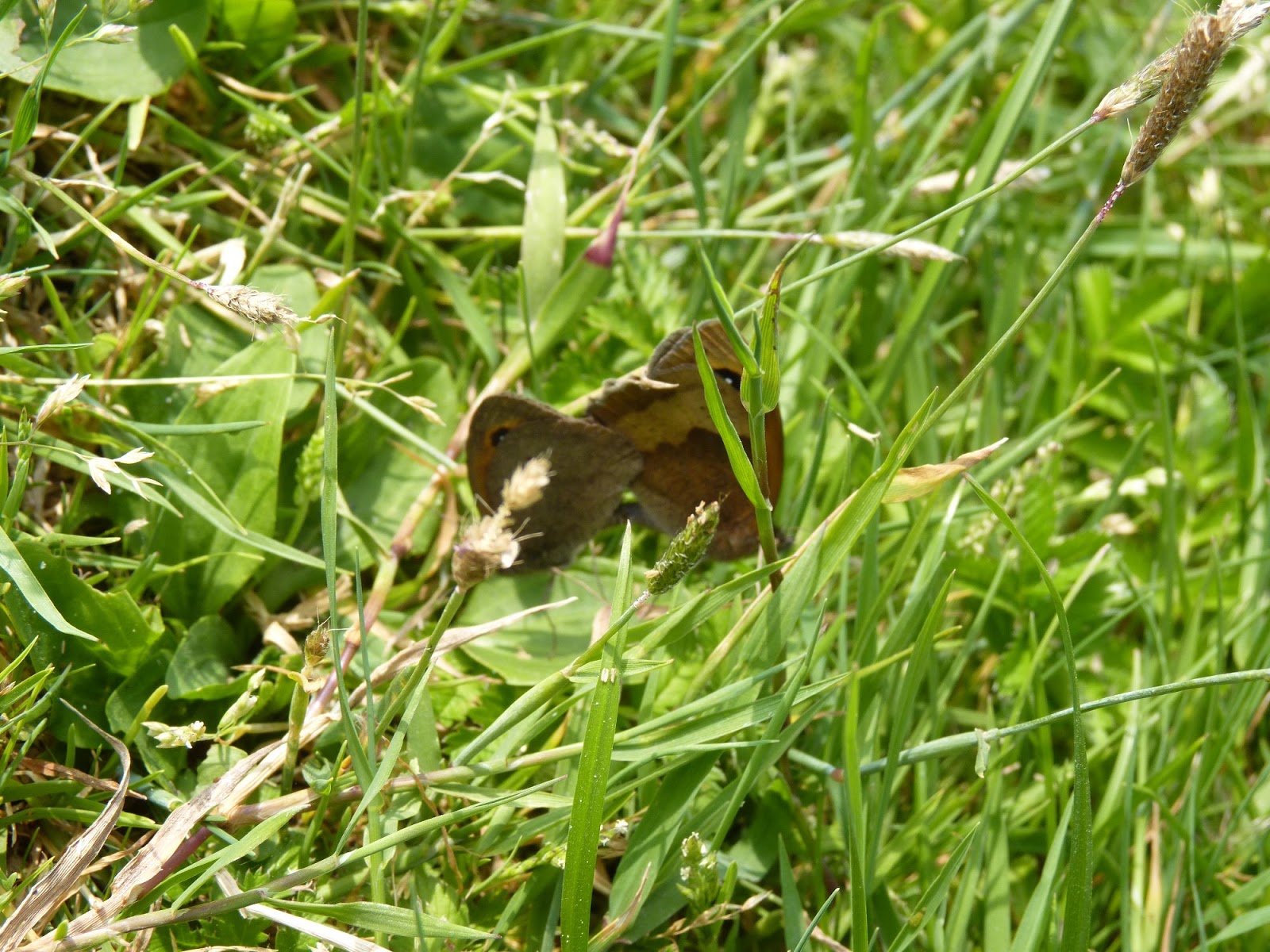
Mating Meadow Browns

More on sea squirts

Many of you know Lorna and I are particularly keen on rockpool creatures. On our last expedition at Bruichladdich we found many sea squirts which seemed to defy identification so I contacted the Marine Biological Association in Plymouth and spoke to the very helpful project officer who has provided some interesting information. I'll repost the photos here with the additional information.

The non-native species Corella eumyota. Distinguishing features are the smooth curve to the gut which you can see through the body, orange tips to the siphons and the second lower siphon is on the right of the body. 

Bortylloides schlosseri  with the large openings of a boring mollusc growing beneath the squirt. You can actually see the eggs. This photo had the experts puzzled for a while!

Sunday, 21 July 2013

Insect Hunt

Having our own ladybirds at the Centre has made Lorna and I more aware of their existence and role in this world. On my annual hunt for the first Islay Purple Hairstreak we came across these two species and a pair of mating Ringlets but, despite (gently) bashing many Oak trees, not a PH in sight! The search continues . . .
Becky

Seven-spot Ladybird

11-spot ladybird


Mating Ringlets

Any Purple Hairstreaks up there?!

Friday, 19 July 2013

Busy morning at the Centre

Arriving at work this morning, anticipating a quiet day in view of the sunshine, I was greeted by two bus loads of people at both ends of the age spectrum. "Oh yes," I reminded myself, "the toddler group are coming today." And then, as I saw the other group emerging I remembered the email about a group of adult students who wished to visit the Centre. Now what date in July did the email say? Today of course! So the Centre was full of excited chatter from 2 and 3 year olds and more restrained excitement from the group of 18 slightly older people. I think that's a record - about 34 people visiting the Centre all at the same time. Fantastic!
Becky

Toddler group at the Touch Tank

Thursday, 18 July 2013

Lobtastic creations!

I am thoroughly enjoying my work at the trust this summer. Despite the sunny weather this week, many families have visited the centre, filling it with laughter and bundles of enthusiasm! Entries for our annual 'decorate a butterfly' competition have poured in, milk bottle top caterpillars are crawling the island, and googly eyed lobsters are emerging! Thanks to everyone who has been in recently, and we hope to see you again soon. 


Lobtastic lobster created yesterday!


Lorna

Wednesday, 17 July 2013

Grass Rivulet, second record for Islay

Ken Willets saw this moth at Kintra on 8th July this year. It is the second record for the island although he reported several more flying round the area. Thanks Ken!
Becky

Grass Rivulet (Perizoma albulata)

Tuesday, 16 July 2013

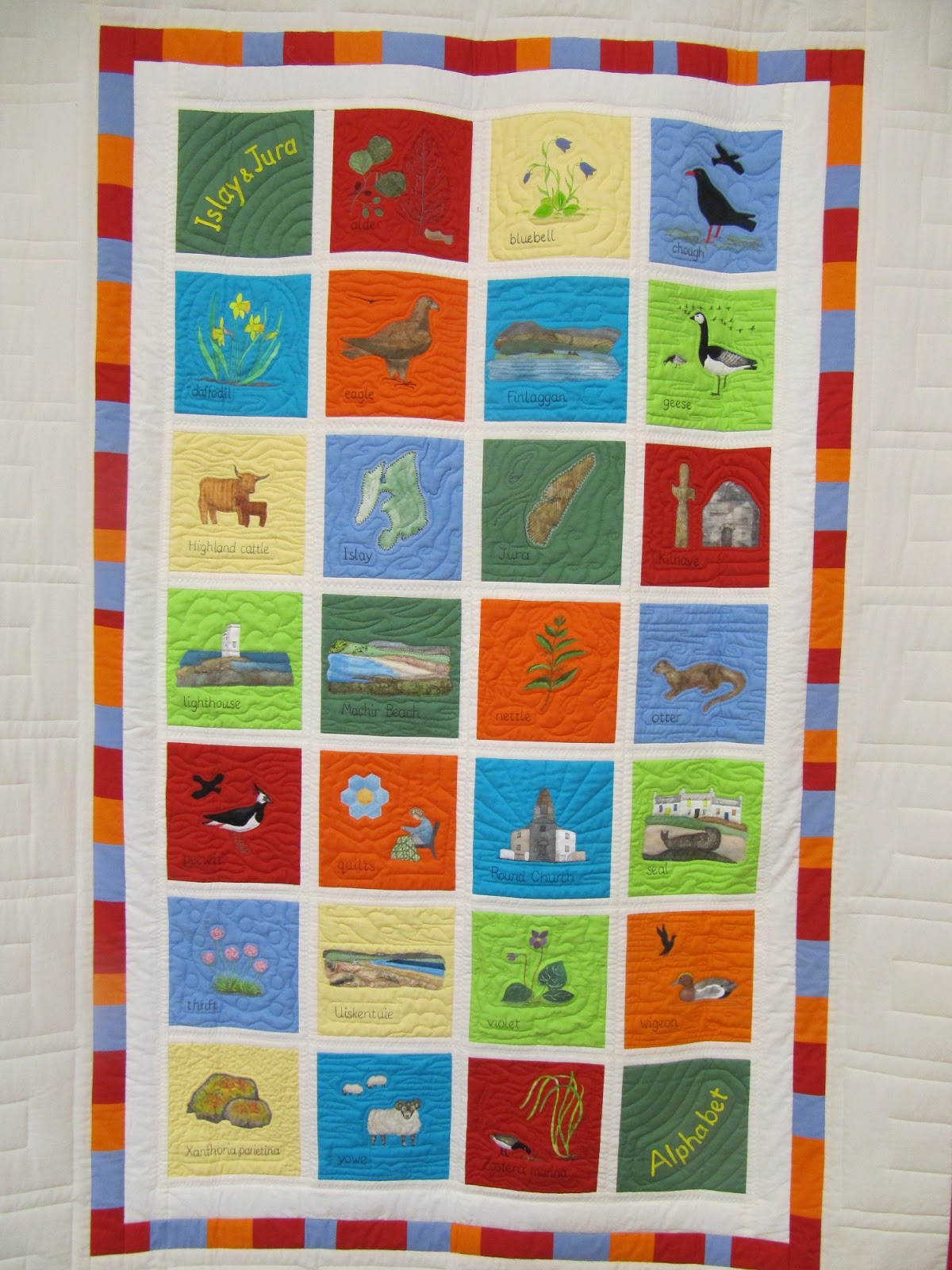
Islay Alphabet Quilt

In 2012 INHT member Kitty Watt created this beautiful alphabetical quilt of all things Islay, including many pictures of the island's natural history. She has been kind enough to let us borrow it for a season, and it now graces the lecture theatre wall in the visitor centre - well worth a look!

Lorna

Ramble at Killinallan, 15th July 2013

Nine adults, three children and one baby (Islay) set off on what turned out to be a breezy ramble yesterday at Killinallan. The Grey Seal colony were sleeping at first, but treated us later to their mournful singing. The dunes were awash with colour. "The only colour of the rainbow we can't see is orange!" one of our younger ramblers noted, at which point Malcolm willed (unsuccessfully) a Small Copper to fly by. Such enthusiasm enriches our nature rambles no end and, from the youngest to the oldest, each brought questions and enthusiasm to make this another very enjoyable ramble at what is one of the island's best botanical locations at probably its peak time of year.
Becky

BIRDS
Herring Gull, Oystercatcher, Eider, Meadow Pipit, Linnet, Wheatear, Redshank

FLORADaisy, Meadow Buttercup, Grass of Parnassus, Black Bog Rush, Self-heal, Common Milkwort, Bog Myrtle, Tormentil, Bird's-foot Trefoil, Cat's-ear, Mouse-ear Chickweed, Eyebright, Spear Thistle, Marsh Thistle, Lady's Bedstraw, White Clover, Red Clover, Bracken, Wild Thyme, Marsh Pennywort, Silverweed, Lesser Meadow Rue, Pyramidal Orchid, Northern Marsh Orchid, Frog Orchid, Field Gentian, Forget-me-not sp., Cuckoo Flower, Marsh Marigold (leaves and seed heads), Ragged Robin, Iris, Meadowsweet, Yorkshire Fog, Soft Rush, Sweet Vernal Grass, Sea Spurrey, Thrift (only just), Harebell, Tufted Vetch, Sea Milkwort, Fairy Flax, Water Mint,  Marram Grass, Goat Willow, Marsh Bedstraw, Yarrow, Common Scurvy Grass, Common Knapweed, Devil's-bit Scabious, Bog Pimpernel, Corn Spurrey, Field Speedwell, Burnet Rose, Heath Spotted Orchid, Common Spotted Orchid, Adder's Tongue Fern, Sea Plantain, Sea Arrowgrass, Water Horsetail, Marsh Lousewort, Common Valerian


OTHER
Common Frog, Six-spot Burnet Moth, Micro moth sp, Ringlet, Grey Seal, Shore Crab, grasshopper sp


Ramblers at Killinallan

Frog Orchid (Coeloglossum viride)

Pyramidal Orchid (Anacamptis pyramidalis)

Monday, 15 July 2013

Rescuing a Wild Goat

Whilst at Bolsa last Sunday, Lorna and I came upon a sorry sight - a young wild billy goat entangled in a mass of fishing rope and nylon line. We spent a precious 15 minutes or so disentangling this poor creature which only had strength enough to bleat faintly in pain. During the process I dropped water (from my own depleting supply!) into its parched throat. After a few minutes Lorna heaved it onto its feet again where it stood slightly disorientated before trotting off to find its own pool of water. We felt rewarded for our small act of kindness, but were sorry we didn't have the means to take away the offending rope - a reminder (if we really needed one) of how dangerous marine rubbish can be.
Becky


Saturday, 13 July 2013

Ladybird Update (Complete with Adder!)

I was cycling to Port Ellen yesterday afternoon when I spotted this slithering female adder right by the road side! It's a good job she wasn't any where near the middle as I wouldn't have been able to move her to safety. I did however pick up a big emperor moth caterpillar that was making headway for the cat's eyes. What a treat!

I promised an update on our ladybird project at the visitor centre, so here it is! As you can see from this picture, they have finally emerged! It is interesting to see the freshly hatched pale yellow individual on the right next to the colourful patterned one on the left. We have also had many colour variations, particularly ones that are inverted (black with red spots). We are hoping that with a plentiful supply of aphids and greenery, our hatchlings will breed. If this is successful the next generation will reach adulthood after around 8 weeks, and be ready for hibernation upon release.

Lorna

Friday, 12 July 2013

Family Activity Session Tuesday 16th July - change of activity

Please note, due to nesting Moorhens on our usual site, we have had to change the venue for our forthcoming family activity session. As advertised, we will still meet at Bruichladdich pier at 2pm, but will head up to Port Mor for a shorter bug hunt session. Apologies for any inconvenience caused.

The Hebridean Whale and Dolphin Trust

An email from this worthy Trust reports:

"As you may have heard, the Hebridean Whale and Dolphin Trust’s project ‘Silurian: the Floating Classroom’ has been shortlisted in the education category of the National ottery good Causes Awards,  for projects that have received lottery funding in the past. In order for us to win, we need to gain as many votes as possible via the free online system (for those with an email address). Voting closes on the 24th July and the top 3 in each category will be invited to the awards ceremony where the winner in each category will receive £2000 towards their project, but more importantly to us is the opportunity to raise the profile of our little organisation on a national platform."


and watch their promotional video at: http://www.youtube.com/watch?v=JclEsYIE0fI

Walk to Bolsa

Lorna and I went a fantastic long walk to Bolsa last Sunday and, apart from the already featured adder, we saw lots of wildlife (including a zillion clegs and midges!) The island was soaked in sunshine and by mid afternoon everything, including us, seemed to be labouring under the excessive heat. We're just not used to it! A fantastic day for butterflies though; even before 10 am we were accompanied by dancing Meadow Browns, Ringlets and Heaths. Here I have a confession to make so never let it be said I am not honest. I saw my first ever definite Large Heath today. Fanfare! Before anyone casts stones, let me say that I have spoken to enough other butterfly enthusiasts to know that not knowing whether you've ever seen a Large Heath before is not such an embarrassing state to be in as you might imagine. There are 3 forms of this species, so variable that they were once considered to be three different species. The form found in Scotland, subspecies Scotica has the appearance of a very large Small Heath, having almost non-existent spots. In north-west England, however, the form davus has richer, redder wings and looks a bit like a Ringlet as its spots on the underside of its wings are very distinct. One of the main reasons I like this butterfly is that it is one of the few species that do not reside in southern England! Hurray for the hardy heaths!
Becky

FLORA
I made a list and lost it

BIRDS
Herring Gull, Great Black-backed Gull, Shag, Whinchat, Stonechat, Dunnock, Yellowhammer, Oystercatcher, Shelduck, Blackbird, Greenfinch, Willow Warbler, Rock Dove, Song Thrush, Snipe, Coal Tit, Redpoll, Chaffinch, Meadow Pipit, Rock Pipit, Skylark, Black Guillemot, Common Sandpiper, Wren, Mute Swan

MAMMALS
Grey Seal, Red Deer, Wild Goat

CRUSTACEANS AND ROCKPOOL CREATURES
Piecrust Crab, Worm Pipefish, Snakelocks Anemone, Beadlet Anemone, Shore Crab, Butterfish, Hermit Crab, Brittlestar, Chiton

INSECTS AND INVERTEBRATES
Bombus lucorum, Bombus pascourum, Bombus monticola, Carabus glabratus, Dung Beetle, Grasshopper spp, Chimney Sweeper, Northern Eggar, Cinnabar Moth, Wood Tiger Moths, Dark Green Fritillary, Meadow Brown, Common Blue, Small Heath, Large Heath, Ringlet, Green-veined White, Golden-ringed Dragonfly, Four-spotted Chaser, Large Red Damselfly, Keeled Skimmer, Wolf Spider, Orb Weaver Spider

REPTILES AND AMPHIBIANS
Common Frog, Common Toad, Common Lizard, Adder

Bombus monticola - Bilberry Bumblebee - restricted to northern and western Britain

Carabus glabratus

Large Heath - much bigger than Small Heath. Its underside spots are definitely present, but rather indistinct

Orb Weaver Spider with prey - a Wood Tiger Moth

Red Deer at Bolsa with Colonsay in the background

Thursday, 11 July 2013

Family Activity Rockpooling

Summer has truly arrived with soaring temperatures, and the sun ever shining down on Islay. On Tuesday I was treated to leading  the second of this year's family activity sessions for the rockpooling. There wasn't a slippy rock in sight (almost) and we delighted, adults, children and all, in discovering Chitons, Prawns and one seriously abundant Shore crab city! It was such a joy to see so much enthusiasm for the abundant Beadlet anemones as well. We also caught more 15 Spined sticklebacks than ever and 2  Father lashers. Thanks to all who came - keep up the great rockpooling!


Lepidochitona cinerea

Lorna

Tuesday, 9 July 2013

Hebrides - Islands on the Edge

For those unlucky enough not to live in Scotland and so didn't see this marvellous four-part TV series the first time round earlier in the summer, it is being broadcast again, but this time nationwide on BBC2, starting this Thursday 11th July at 9.00 pm. It's not to be missed. The first episode includes a great deal filmed on Islay.
 Malcolm


Ardnave Ramble 8th July

A small but keen group of five enjoyed a ramble at Ardnave in warm (even hot) sunny conditions on a day when the temperature at the airport met station reached a massive 22 degrees C! Ardnave Loch held the family of Mute Swans (4 cygnets) and Tufted Duck (c.9 ducklings) and after finding a few plants growing round the edge we walked over the grassy ridge and down to the shore of Loch Gruinart, finding Becky's favourite plant (the Harebell) on the way, except that she wasn't there to enjoy it! Several Six-spot Burnet moths showed off their red spots and red underwing and gave rise to a discussion about the difference between moths and butterflies, the clubbed antennae of the latter being a main distinguishing feature, except for those species which don't have them, not forgetting that the burnet moths have clubbed antennae! And, of course, butterflies fly during the day, and moths at night, except for those, like the burnets, which fly during the day. Hmm, perhaps the burnets are really butterflies! Passing the rocky islet on the shore brought three or four Arctic Terns into the air which from their angry calls must have had young to protect. A Redshank similarly showed its displeasure at our (brief) proximity to where it, too, must have had its young. Bog Pimpernel was admired by all on the edge of the marshy ground, but despite quite extensive searching no orchids could be found.

Mammals
Hare, Grey Seal

Birds
Mute Swan, Tufted Duck, Eider Duck, Great Black-backed Gull, Herring Gull, Common Gull, Arctic Tern, Redshank, Oystercatcher, Ringed Plover, Wheatear, Swallow

Flowers
Lesser Spearwort, Marsh Marigold, Meadow Buttercup, Bulbous Buttercup, Lady's Smock, Water-cress, Common Milkwort, Ragged Robin, Common Mouse-ear, Sea Spurrey, Yellow Meadow Vetchling, Black Medick, White Clover, Red Clover, Bird's-foot Trefoil, Lady's Bedstraw, Spear Thistle, Marsh Thistle, Creeping Thistle, Thyme, Daisy, Thrift, Cat's-ear, Hawkbit, Harebell, Bog Pimpernel, Water Forget-me-not, Germander Speedwell, Eyebright, Water Mint, Sheep's Sorrel, Yellow Flag, Common Reed, Common Butterwort, Common Nettle, Bracken, Soft Rush, Black Bog-rush, Star Sedge, Common Cotton-grass, Common Spike-rush

Butterfly and moth
Small Heath, Six-spot Burnet

Malcolm
Bog Pimpernel

Six-spot Burnet

Monday, 8 July 2013

Short Adder Video

http://www.flickr.com/photos/rhubarbcrumbleandcustard/9234936850/in/photostream


Lorna and I went a long walk to Bolsa yesterday and watched an adder slide gracefully along the stones of the ruin there. It was quite undisturbed by our presence and we watched it for at least a minute. More photos to follow.
Becky

Beautiful Seaslugs

A few weeks ago I wrote of the fantastic wildlife my mum (Becky) and I uncovered on a rockpooling expedition at Bruichladdich. At the time I didn't include the Sea slugs which were awaiting identification. It turns out there are many of these nudibranches, including some very similar species in our waters, making this a challenging task. However, we have done our best, and here are some photos for you to enjoy. I have also added a picture of our ladybirds which are now all in the chrysalis stage and shall be emerging very soon. We will then decide whether to keep the adults for them to breed so we can enjoy the whole cycle again!
Chrysalised ladybirds

Facelina bostoniensis - a gorgeous sea slug with  pinkish shimmering cerata. This specimen laid eggs while in our care, which can be seen here as a long white thread from its head and emerging out of its body.

Facelina bostoniensis with mating Acanthodoris pilosa x2 to the left. We also had a Facelina auriculata which I didn't get a decent photo of. This is a dainty little purple sea slug, also very pretty.

Lorna

Ascension Frigatebird update

Despite lots of people looking for it, including many who travelled here from different parts of Britain, the Ascension Frigatebird has not been seen again. Indeed, the claimed sighting of it flying over the head of Loch Indaal at 4.00 pm on the same day it was seen in Bowmore has not been verified. There was another red herring sighting when it was reported as having been seen sitting on a fishing boat belonging to someone who regularly fishes off Portnahaven. This led to the not unreasonable assumption that it was sitting on the boat while at sea off that village several miles south of Bowmore. Not a bit of it, as the boat in question was moored in Bowmore Harbour at the time!
This morning, I received two more photographs of the bird, taken by some non-birders from Norway who were sitting having breakfast in the Harbour Inn, Bowmore, which overlooks the pier, and saw the bird land on the pier about 8.10 am or about quarter of an hour before Jim Sim spotted it. They were sufficiently intrigued to go outside and photograph it before returning to their breakfast, but didn't realise the significance of what they had seen until showing the photographs yesterday to someone from the RSPB who was manning a stall on the Arran ferry. So thanks very much to Dr Vernon Boanrjee from Stavanger. One of his photos is more or less identical to Jim Sim's, but here is his second one.
Malcolm

Saturday, 6 July 2013

Ascension Frigatebird !!!

These two photographs were taken yesterday morning (5th July) at Bowmore Pier by holidaymaker Jim Sim from Renfrewshire and show Britain's (and Ireland's) second-ever record of an Ascension Frigatebird. It was first seen sitting on the pier wall before it took off. Word soon got around the island but, despite lots of looking for it throughout the day, it wasn't seen again until the afternoon when it was reported to have been spotted flying over the head of Loch Indaal. It is likely that a great many birders (=twitchers!) are on their way here, so there will be many more pairs of eyes searching the island and the skies for it today.
There is just one previous record of an Ascension Frigatebird in Britain and Ireland, back in 1953 when one was caught alive on Tiree, dying the next day. Initially thought to be a different species, a Magnificent Frigatebird from Cape Verde Islands or the Caribbean, the bird ended up as a skin in the National Museum of Scotland. It was not until 2003 that it was re-identified as an Ascension Frigatebird! There have been a handful of other Frigatebird sightings over the years, most unidentified as to species but including two definite Magnificent Frigatebirds (one on the Isle of Man in 1988 and one in Shropshire (!) in 2005, both of which were picked up in poor condition, taken into care and later died).
As its name implies, the Ascension Frigatebird is found only on Ascension Island in the South Atlantic breeding on the tiny (7.5 acres) nearby Boatswainbird Island with a population thought to number about 12,500 adults, plus an unknown number of immatures (they don't breed until they are several years old).
This is an immature bird (from the whitish head) and has travelled northwards for a minimum of 4,000 miles. There have been very few sightings more than about 100 miles from Ascension so it is not normally an ocean wanderer.
Frigatebirds get some of their food by piracy, chasing other seabirds until they disgorge the fish they are carrying back to their chicks (just like Great Skuas do), and this is thought to be the reason for their name, but they probably get most of their food by direct capture, snatching fish from the sea surface, not being able to dive, like Gannets, for example.
This remarkable sighting has already been posted on Ian Brooke's invaluable 'IslayBirds' blog, but it didn't seem something we could ignore here!
Malcolm


Friday, 5 July 2013

A new moth

Sometimes when I catch a moth I don't recognise, I have to consult an expert to confirm my identification, but last night I caught a new moth, called the Miller, which was nice and easy because there is nothing else resembling it. This is the first record for Islay of this moth which is quite widespread in England and Wales, but much less so in Scotland, where it is particularly uncommon on the west coast. There was one caught on Colonsay in summer 2011 and it has been recorded a few times from Mull and north of Oban, but nowhere else in Argyll. Its caterpillar food plants are birch, alder and willow, so there's plenty of food here if it wants to colonise!
The diameter of the plastic pot I photographed the moth in is 4 cm.
Malcolm

Wednesday, 3 July 2013

Lobster Moult

Our shy lobster has literally and metaphorically come out of its skin! It has shed its skin in its first moult and now seems to be slightly bolder than it was! We have named our lobster again and invite visitors to guess its name for 50p a go with the chance of winning a cuddly red lobster. This year our lobster has a male name so get your guesses coming!
Becky

Lobster moult - the skin measures 27 cm

Nature Ramble at Sanaigmore, 1st July 2013

There were fewer of us for today's ramble, 4 visitors and Malcolm and I, but what we lacked in numbers, we made up for in enthusiasm. The highlight had to be the Corncrake calling obligingly at the beginning of the ramble. Unlike last week's otter, it was a first for a couple of our visitors and they were delighted! We identified a few new plants as well as revelling in the abundance of flora. I've been promised the list will be checked and omissions pointed out! I wait with bated breath!
Becky

BIRDS
Corncrake, Herring Gull, Common Gull, Arctic Tern, Ringed Plover, Oystercatcher, Swallow, Meadow Pipit, Rock Pipit, Pied Wagtail, Raven, Blackbird, Wren, Wheatear, Gannet, Skylark

FLORA
Cut-leaved Crane's-bill, Common Storksbill, Eyebright, Ragwort, Common Milkwort, Water Forget-me-not, Germander Speedwell, Field Speedwell, Thrift, Wild Thyme, Biting Stonecrop, Thyme-leaved Sandwort, Sea Rocket, Sea Milkwort, Marsh Marigold, Bulbous Buttercup, Meadow Buttercup, Ragged Robin, Lesser Spearwort, Watercress, Water Mint, Carnation Sedge, Oval Sedge, Black Sedge, Yorkshire Fog, Crested Dog's-tail, Daisy, Bird's-foot Trefoil, Silverweed, Monkey Flower, Water Forget-me-not, White Clover, Red Clover, Lady's Bedstraw, Daisy, Common Mouse-ear, Hawkbit, Spear Thistle, Creeping Thistle, Lesser Burdock, Common Nettle, Yellow Iris, Autumn Gentian, Common Centaury, Self-heal, Pineapple Mayweed, Fairy Flax, Yarrow, Broad-leaved Dock, Curled Dock, Field Gentian, Cuckoo Flower, Dog Violet, Northern Marsh Orchid, Hawkweed, Cat's-ear, Marram Grass, Hemlock Water-dropwort

INSECTS
Small Heath, Common Blue, Click Beetle, Bombus pascuorum (Common Carder Bee), Bombus lucorum (White-tailed Bumble Bee)

LICHEN
Xanthoria parietina (bright yellow foliose sp), Ramalina sp, (fruitose sp), Anaptychia runsinata (brown, but goes green when wet), Lecanora sp (crustose sp - has jam tart like apothecia), Physcia adscendens (has 'eyelashes')

Bombus pascourum (Common Carder Bee)

You sometimes need to be prepared to get down on all fours during our rambles!


With the late spring this year, the Thrift is out at the same time as the Wild Thyme, producing an even more colourful than usual floral carpet!