Sunday, 8 May 2011

Shorefield cattle escape technique

Readers of this blog will recall that the Highland cattle at Shorefield near Bruichladdich had a propensity for escaping despite the best efforts of James Brown and Carl reinforcing the fences. The other day, I saw these signs of what may have been one of their escape techniques. In order to reduce the painful effects of clambering over/through barbed wire fencing, do they perhaps first deliberately rub against it to cover up the barbs!
Malcolm

Butterfly Records Wanted

The Islay Natural History Trust is trying to increase its records of butterflies on Islay this year. It seems a good year to be doing it because there are so many butterflies around. We want records of all your sightings on Islay, Jura and Colonsay. Please send them to us using the species record forms available from this blog (see link at top of page), regular email or old-fashioned paper post. Remember to include grid references, numbers seen and any other comments. No sighting is too mundane!

Becky

Friday, 6 May 2011

Lichen conundrum


Some years ago I climbed one of the Paps of Jura and took a photo of this lichen. Since then I have been trying to find out its identity, without any success. I thought I'd ask the lichenologists this week and get a quick answer, but no; apparently it's been the subject of some debate over at Port Charlotte youth hostel. There is no definitive answer; some say its purplish hue is caused by birds digesting and subsequently excreting bilberry juice! But others think the rain would have washed the 'dye' away and the purple stone has been seen this week by a lichenologist. 7 or 8 months (since bilberry season) is a long time for the dye to remain. So the problem remains and has apparently also been the subject of debate on lichen forums for some time. Watch this space for any further developments. . .


Becky

Thursday, 5 May 2011

Willow Warbler in Lichen-covered tree - Jo Griffiths

A very appropriate picture from Jo given that the British Lichen Society is currently using the lab at the Visitor Centre to write up their fieldwork from the past couple of days.  This is a very sensible idea as there is so much rain falling on Islay at the moment that even the lichens will have run for cover...

Wednesday, 4 May 2011

Bluebell Wood at Knockanbearach - Alistair Hutchison

Thanks to Alistair for this lovely seasonal shot...

Butterfly Records from Niall Oliver

Thanks  to Niall for these records:

Green Hairstreak 25/04/11 Tha Oa, American monument car park 282423


Green Hairstreak 25/04/11 Tha Oa, American Monument 270417

Orange Tip 29/04/11 Inverlussa, Jura 643868

Orange Tip 01/05/11 Beul an Atha, river bank 335622

Green-veined White 01/05/11 Beul an Atha, river bank 335622

Speckled wood 01/05/11 Beul an Atha, woodland 336621

Red Admiral 01/05/11 Beul an Atha, woodland 336621

Peacock 01/05/11 Beul an Atha, woodland 336621


Female Orange Tip


Speckled Wood (Pararge aegeria) - Gordon Homer


Thanks to Gordon for this shot of a Speckled Wood shot (in the nicest possible sense) in Bridgend Woods.

Common Milkwort


Short turf is currently sprinkled with these tiny blue and pinkish flowers. Just to be confusing, they are the same species, Common Milkwort (Polygala vulgaris). And further confusion is possible because there is another milkwort here which is also plentiful, the Heath Milkwort (Polygala serpyllifolia), which also has blue flowers but never pink ones. The quickest way of working out which is which for blue flowered plants is that the leaves of Common Milkwort alternate up the stem, whereas in Heath Milkwort they are in opposing pairs.
Malcolm

Black Morel (Morchella elata) - Alistair Hutchison

Thanks to Alistair for this record of this unusual funghi.

http://www.rogersmushrooms.com/gallery/DisplayBlock~bid~6467~source~gallerychooserresult.asp

Jura announces 'World's First Walkie Talkie Cafe'

We  do not usually print advertorial press releases here on the INHT blog - but the opportunity to bring you this is just too good to pass up...

A 'World First' for Jura?


Is Tea On The Beach the world’s only walkie-talkie cafĂ©? Situated at Jura’s wild and beautiful north end, Tea On The Beach operates daily at Inverlussa Bay. Teas, home-made cakes, fresh coffee and cold soft drinks are on the menu and are delivered to you to enjoy on the beach. A busy season last year, with visitors from near and far (“Best cuppa anywhere”; “Fantastic chocolate brownie”) has continued in 2011.

The bay at Inverlussa is a gem. The first glimpse of the sea as you approach never fails to thrill, whether it is your first visit, or if you know it intimately. Inverlussa is clearly signed to the right just after crossing the Lussa River, 26 miles from Feolin Ferry.

It is easy to park on the grass by the bay, and you can explore the beach, walk out to the points both to the north and south (keep an eye out for otters), or climb either side of the glen for spectacular views of the mainland and Jura’s coast, hills and mountains. At all but the highest tides there is plenty of room for beach games, sandcastles and rock-pooling; even at high tide there is lots of space on the meadows. The sandy bay shelves gently down, so the beach is wonderfully safe for children to paddle, swim or use their fishing nets.

After the journey and enjoyment of the bay and beach, you will be ready for a cup of tea and a slice of homemade cake. Fortunately you don’t have to leave the charms of the beach for your refreshment. Next to the sign for Tea On The Beach you will see a table with a walkie-talkie and menu on it. You can place your order using the two-way-radio (instructions are provided!) and it will be brought to you on the beach. Tea On The Beach is normally open from 11-4.30 on weekdays and 10-5.30 at weekends. If you are making a special trip, do phone to double-check the service is operating as opening hours are flexible (although a self service tea is normally available if the owner isn’t!): 01496 820053.

Hooked on Lichens

I don't know what to say about my expedition yesterday with the British Lichen Society people  - except I'm hooked! How I am ever going to manage to go a 'proper' walk now I don't know, and if I manage to get someone to go with me once, it's a sure thing they won't want to come with me again. It was bad enough when I was stopping to look at butterflies, beetles, botany and birds; now I'll be stopping every few yards to examine every fencepost, wall or stone that I pass. Worse still, not only will I have my binocs and camera hanging round my neck, but I'll now have a hand lens to join in the tangle of straps. I never travelled light before, but now I'll have even more stuff to jam in the rucsack - bottles of bleach and potasium hydroxide, massive lichen field guide and the compulsory hammer and chisel. Wow! I can't wait to get out again!


Potassium hydroxide applied to the genus Calaplaca turns the lichen reddish/purplish which helps distinguish it from the genus Candelariella. Photos show Maxine applying the test to Calaplaca on the Oa, and the red result. Thanks to the BLS for allowing me to join them and for being so patient with a complete beginner.

Becky

Gorse

It may be regarded as a weed by landowners and farmers, but it is also a magnificent spectacle on this scale, coupled with the heady scent.
Malcolm

Tuesday, 3 May 2011

A Big Drinker

Drinker moths are apparently so called because their caterpillars are enthusiastic drinkers of dew.  They are everywhere at the moment - perhaps enjoying posing out in the open during the spring sunshine.  Very few predators eat hairy caterpillars such as the Drinker - the famous exception being the cuckoo - of which there do not seem to be many around as yet.  Happy days if you are a Drinker moth caterpillar...

Sea Campion (Silene uniflora)

At Kintra

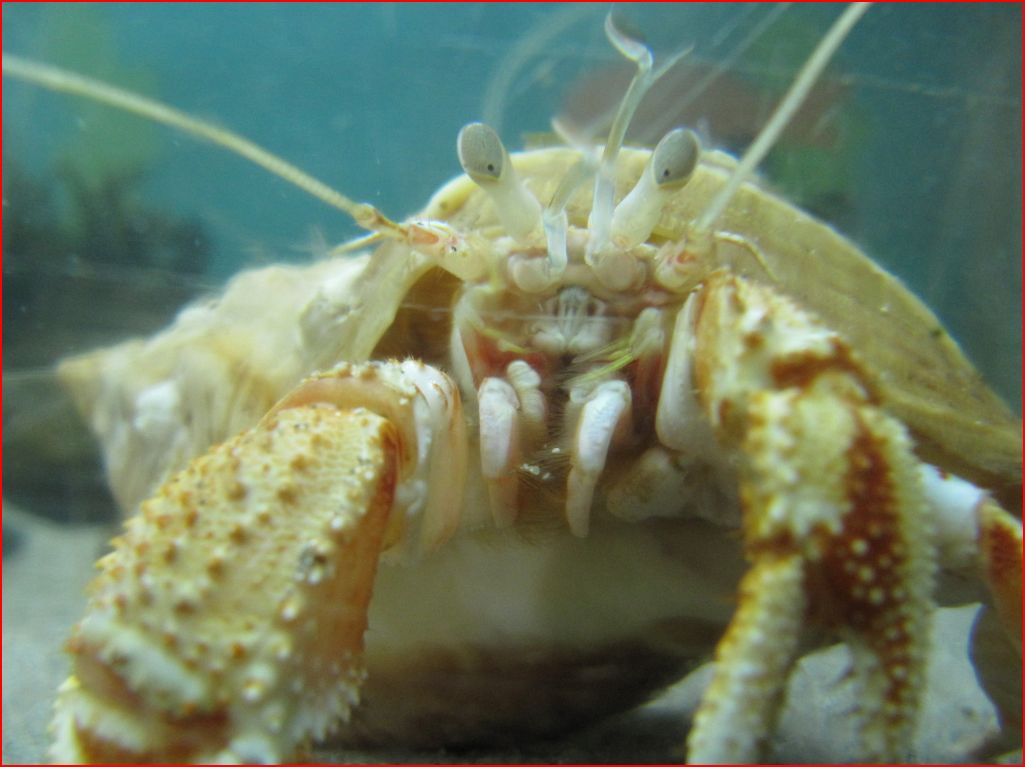
Common Hermit Crab (Pagurus bernhardus)

Photographed through the glass of the big marine aquarium at the Visitor Centre.  The Centre will open for the summer on 23rd May.

Monday, 2 May 2011

Brown hare (Lepus europaeus)

Ringed Plover (Charadrius hiaticula) - Ardnave

Orange Tip Butterflies

After a tip off from friends I went to Bridgend Woods this afternoon in search of the Orange Tip Butterfly (Anthocharis cardamines) - and saw it! I ran after it in the hope of taking a photo, but it just kept disappearing, then reappearing and giving chase again. In the end I had to give up, but it's there, waiting for someone else to take a photo. I think there's a few records annually on Islay of this species, but it was the first time I'd seen it here, so I was really excited. It's also been seen near the Lily Loch and at the Woollen Mill, so there must be quite a few around at the moment.

photo: butterfly-conservation.org
Becky

Dogwhelks (Nucella lapillus) and their eggs - Jo Griffiths

Nice shot of Dog whelks with their eggs from Jo - many thanks...

Brooklime (Veronica Beccabunga) - Ardnave