Tuesday, 11 October 2011

Bronze Age Standing Stone - Grimsay on the Rhinns


This was photographed a couple of weeks back after a wet walk across very boggy ground to the abandoned clearance village of Grimsay northe west of the Gearach Loch on the Rhinns.  I had not visited it for a number of years, the last time being during the Spring.  This time the bracken and grasses were much longer - and I had the impression that the willow scrub had spread significantly since my previous visit.  This may, (or may not!) reflect a change in the land use in recent years with less intensive grazing by sheep.
Carl

Wildlife film makers Nigel Pope and John Aitchison to give talk at Centre


Producer Nigel and cameraman John have been filming on Islay for their latest BBC Scotland commission entitled - 'Hebrides - Scotland's Islands on the Edge of the World'.  We are delighted that these well-known professionals have found the time in their busy schedules to come to the Centre to tell us some of the stories from behind the cameras, and show us some extracts from their work.

Monday, 10 October 2011

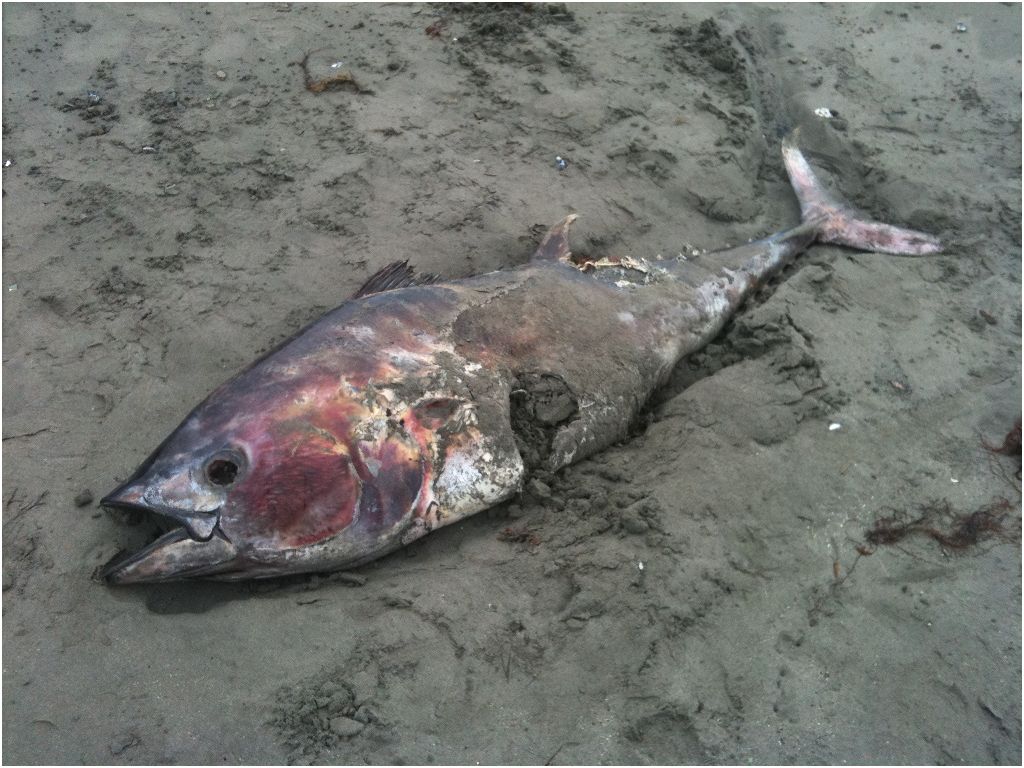
Tuna washes ashore on Mull - Hebridean Whale and Dolphin Trust


A report of a rare sighting prompted an investigation after a tuna was spotted on the shore of Laggan Sands, Isle of Mull. The Hebridean Whale and Dolphin Trust (HWDT) were notified of by the unusual find and set off for Lochbuie. Morven Summers, Volunteer Coordinator at HWDT, said, “We were a wee bit dubious at first and thought that the reporter may have mistaken a porpoise, however when we arrived at Laggan Sands we were shocked to see the huge fish on the shore.” It’s believed that the fish is a bluefin tuna; a large, torpedo-shaped fish that can travel at speeds of up to 43 miles per hour and weighs, on average, 550 lbs, although much larger specimens are not uncommon. The Mull tuna measured 1.8 metres long. Brain Swinbanks, Chairman of the Tobermory Harbour Association, added, “Seeing the fish up close was fantastic, I would guess that the ’mull tuna’ weighed about 150 lbs.”

Atlantic bluefin tuna spawn in the Mediterranean Sea, however they are highly migratory and tagged individuals have been tracked swimming from North American to European waters several times a year.

Although not many consider the waters off the west coast of Scotland to play host to such a fish, historically tuna did frequent these waters. Dr. Clive Fox, from the Scottish Association of Marine Science in Oban, explains, “Bluefin tuna are rare in our waters but not unprecedented, indeed there used to be a commercial and sport fishery for them before the war.” In fact, evidence of bluefin tuna making an annual migration to UK waters goes back a few hundred years. Brain Swinbanks, Chairman of the Tobermory Harbour Association, added, “ The British rod and line record for Blue Fin Tuna is 851lbs caught in the North Sea in 1933 by Mr Mitchell-Henry fishing from a ship’s rowing boat 50 miles off shore and alongside the Herring Fleet. A decline in the stocks of herring resulted in a decline in migratory Tuna which originally came from the Mediterranean migrating all round the west coast of Scotland.” In September 1989, a 400lbs tuna was reported caught close to the Isle of Lewis.

Unfortunately the tuna carcass was too decomposed for full analysis, however the fish’s otoliths (ear bones) will be recovered and from these the age of the fish can be determined. If you find a stranded animal, HWDT would be very interested to learn about it. If researchers reach the carcass in good time then we can learn many things about the animal and why it may have perished. Please contact HWDT on 01688 302620 or email sightings@hwdt.org if you find anything on the shore.

Sunday, 9 October 2011

Not much happening!

Regular readers, of which we know we have many, will have noticed the paucity of posts of late. The main posters, Carl, Becky, Mark and myself, are either away (Becky, Carl), have just been away (me), or have left the island (Mark), resulting in the present drought. However, a drought is not what has been happening outside in the last few days with 32 mm of rain in the last 36 hours, and another 20 mm in the previous three days. That's over 2 inches in old money, and not only is the island saturated, but photography has been fairly pointless, too. Where I live in Bruichladdich I normally have a view across Loch Indaal to Bowmore. From Friday evening until mid-afternoon today (Sunday), Bowmore was invisible because of the thick mist enveloping the island. And even now, the hills are still shrouded.
So here's what my view is just now. Sunny Islay it is not!
Malcolm

Thursday, 6 October 2011

Conservation and nature tourism bring economic boost

The RSPB have just published an important new report showing how valuable conservation and nature tourism is to the economy.
Here are a few extracts from the press release accompanying the report:

More and more people are enjoying nature in the UK, bringing economic benefits to local communities.
These are the findings of a new study from the RSPB looking at how conservation and nature tourism create jobs and bring money into local areas. The effects are being felt across the UK, from far flung rural areas to urban fringes.

The RSPB’s 200 reserves now attract two million visits a year. They help bring £66million into their local communities, supporting 1,872 local jobs – an 87 per cent increase since 2002.
These findings complement the Government’s recent National Ecosystems Assessment (NEA) which highlighted the economic benefits conservation delivers through clean air and water, flood defence, carbon storage and wellbeing. The NEA shows that the natural environment is worth billions to our economy every year and conserving it makes sound economic sense.
The rare wildlife habitats that are protected on nature reserves are often found in some very remote places – so the benefits they bring to rural communities can be very important.

Research by Natural England shows that people travelling within England to enjoy nature increased by 10 per cent between 2005 and 2009, despite general tourism trips declining by 9 per cent in this period. The most recent figures showed nature tourism visits reached nearly 3 billion last year with visitors spending an estimated £20.4billion in the local area.
Similar research by Scottish Natural Heritage has revealed that nature-based tourism supports spending of £1.4 billion per year, and 39,000 jobs in Scotland.
Visits to RSPB reserves grew 38 per cent, from around 1.5 million to almost 2 million in the last five years. Over 1,000 local jobs were supported by tourism to RSPB reserves in 2009, three times the number that were supported in 2002.
Reintroductions of charismatic species can also be a big draw for nature tourism. The return of the once extinct white-tailed eagle to the Isles of Mull and Skye now supports more than 150 local jobs while the reintroduction of red kites to Dumfries and Galloway has brought 20 new jobs to the area.
As well as local businesses servicing tourists, like pubs, hotels and restaurants, nature reserves create direct jobs on reserves, support local industry in the construction of visitor facilities and habitat management, and play host to farming lets where cattle and sheep graze reserve land.

Tuesday, 4 October 2011

Swallows still here

But probably not for much longer if the northerly blast threatened for the next few days materialises.Still, seeing one today gives me an excuse to post this fantastic photograph of a swallow in flight taken by Gordon Langsbury.
Malcolm

Sunday, 2 October 2011

Fox Moth

The hairy caterpillars of this species are still around, feeding up before they descend into the ground vegetation and leaf litter to hibernate through the winter. They feed on a variety of plants including heather, bramble, bilberry and willows. This one which I photographed just now was close to 70mm long, which is about as large as they get. In the spring, they will feed some more before pupating and emerging as the adult moth. It isn't a particularly spectacular moth - not as brightly coloured as the caterpillar, anyway - and has a wingspan which is also about 70mm.
Malcolm

Saturday, 1 October 2011

Gordon Langsbury

Having returned from a week abroad, I would, as Carl thought, like to add a few words of tribute to Gordon. He first came to Islay in 1970 and, as so many people do, kept on returning, in his case at least once a year right up until two years ago, when he decided that the journey from Berkshire was too much for his wife, Joy, who was becoming increasingly infirm. I first met him in the mid-1980s, soon after moving here, and when the Natural History Trust moved into its present Centre in 1992 and we had a room where we could host public talks, Gordon became an annual fixture, never bothered about giving up an evening of his holiday. He used to lead birdwatching tours to many different parts of the world and also go on photography trips with other bird photographers at home and abroad. And each year he would transport us, his audience, to places such as Kenya, the Falklands, Texas, the Netherlands, Norway, Spain, Shetland, the Scillies, etc., etc. His outstanding bird photographs were always accompanied by scene-setting habitat shots, putting the birds in their context and so greatly adding to the interest and enjoyment of his talks.
One evening a few years ago, when he and Joy were having a meal with us, he happened to say: "You know, Malcolm, I've probably now photographed all the regular birds of Islay." And it was that casual remark, followed by the germ of an idea in my mind, that led to us getting together and publishing, in 2006, "The Birds of Islay - A Celebration in Photographs" containing about 170 of Gordon's photographs to which I added brief texts. Gordon eschewed nest photography, except very occasionally, so his photographs are of birds in their natural habitat, feeding, swimming, flying, etc.
Gordon retired from being, in his words, "a village bobby", early enough to have a second career as a professional photographer. Indeed, his careers overlapped, as he was elected a Fellow of the Royal Photographic Society back in 1978. His work has won many awards and has been widely published in magazines and books, and he was a familiar figure on the bird club lecture circuit. Many's the visiting birdwatcher to Islay who, on seeing the poster for his talk and having been to one of his talks in England, made sure that they came to hear him again. A most approachable and friendly man, he will be much missed by a large number of people including by his many friends here on Islay.
Malcolm

Thursday, 29 September 2011

Last day at Centre and Butterfly Competition Winner

Today is my last day at the Centre for this season. I've really enjoyed working here again this year and always feel a bit sad when we release the sea creatures. I wish to announce the winner of the butterfly (adults) competition. Fanfare!!!!!!! The winner is ............ Martin Collinson. Congratulations Martin. Well done also to the other all-correct entries: Melinda Bell and Mark and Sally Johnson. Everyone else did really well too, so well done to Hazel Rose, the Lawson family, Jeny Waitt, Trevor and Gill Guy, Shirley White, Mark Nelson and Lorna Williamson, Mike Drew, John Bubbers and Elaine Richardson. Better luck next time!
Becky

Wednesday, 28 September 2011

Gordon Langsbury FRPS

Many of us will be saddened to hear of the sudden passing of the photographer Gordon Langsbury FRPS, who has been a great friend of the Trust over many years.  He is pictured here on the Islay stand at the recent Birdfair in Rutland Water with Paul Watchorn. 

Malcolm Ogilvie, Gordon's great friend and co-author of the book 'Birds of Islay - a Celebration in Photographs' is currently out of the country but I am sure he will wish to pay tribute to Gordon on his return.
Carl Reavey

Mute Swan - James Deane


Three lovely shots of a Mute swan in flight from the archives of James Deane - Thanks James!!

http://www.jamesdeanephotography.com/

Tuesday, 27 September 2011

Bulrush - Typha latifolia


A gloomy picture of Bulrushes taken on the Bridgend Merse this evening.  Apparently archaeology suggests their roots are edible and were eaten, but I believe even Ray Mears has had difficulty proving this a practical proposition in the real world.  Also known as Reedmace or Cattails.
Carl

The old clearance village of Olistadh


We took a group of Port Charlotte Primary P6 and P7 pupils up to the old clearance village of Olistadh this morning.  It is about a mile from the Kilchiaran road and accessed along a forestry track.  We had an interesting time imagining what it must have been like to live up there.

The village was probably abandoned as a settlement when Port Charlotte was built in 1829.
Carl

Deer at Dawn over Loch Indaal - Les Wilson


Thanks to Les for this shot taken on his phone early in the morning as he was walking back to Port Charlotte from Bruichladdich. 

Getting the image off the phone at a decent resolution has proved beyond our combined technological expertise thus far, so I thought it best to post this blown up postage-stamp sized version just in case it never happens.  It is a great shot.  Les said that he could see the deer moving along the coastline, and hoped that they would move into the perfect position if he waited a while - which they duly did.  Nice one.  I will re-post at a decent resolution if we ever get it sorted....
Carl

Monday, 26 September 2011

Milly Duncan is our Butterfly Winner!

Congratulations to Milly Duncan of Glasgow, aged 7, who has won our Design a Butterfly Competition. Fiona found the task of judging very difficult as we have had some beautiful, imaginative entries. Well done to everyone who entered. We hope you had fun designing your butterflies. Milly has won one of Green Bug Production's excellent activity packs. Well done Milly! Here is her winning entry. To see all the entries, why not pop in to the Centre this week? We close for the season on Friday 30th September at 1 pm.
Becky

Sunday, 25 September 2011

Seaweed as fertiliser

Duncan McGillivray was on the beach at Blackrock at first light yesterday, grapeing seaweed that has piled up after the recent stormy weather.


The box on the back of Duncan's Massey Ferguson (an old 1960's machine that he restored himself) holds about two tons.  Any more and the front wheels come off the ground....

The seaweed is destined for the Islay House Community Garden at Bridgend for use as fertiliser.  Duncan has delivered about 15 tons so far....

It will be barrowed onto the potato patch and dug in...  Best potatoes in the world next year...

Friday, 23 September 2011

Flora and Fauna at Ardnave, 23rd September 2011

The rain held off for the six of us this afternoon at Ardnave. Most of the wild flowers have now finished, but fungi is springing up all over the place and the waders are passing through.The highlight today was the flock of Wigeon that landed on Loch Gruinart just as we left to walk back to the cars. We also saw a flock of about 20 Ravens flying low over the Loch. Thanks for everyone's contributions. Next Monday will be our last ramble for the season, so join us if you can at Kintra (booking required).
Becky

BIRDS
Mute Swan, Tufted Duck, Wigeon, Raven, Meadow Pipit, Redshank, Ringed Plover, Common Gull, Black-headed Gull, Rock Dove, Starling

MAMMALS
Rabbit

LICHEN AND FUNGI
Xanthoria parietina (yellow foliose), Anaptychia runsinata (Brown foliose turning green when wet), Ramalina sp. (grey/green fruitose), Lecanora sp (crustose with black 'jam tarts'), Physcia adscendens (with 'eyelashes'), Caloplaca flavescens (orange with 'fingers'), Ochrolechia parella or Fish-eye Lichen (white crustose with 'dents' in apothecia (fruiting bodies))

INSECTS
Bombus lucorum (White-tailed Bumble Bee), Bombus pascuorum (Common Carder Bee), Unknown tiny black bug, Leafhopper, Froghopper

FLORA
Dove's-foot Cranesbill, Common Storksbill, Jointed Rush, Common Spiked Rush, Daisy, Dandelion, Hawkweed sp., Ragged Robin, Grass of Parnassus, Lady's Bedstraw, Devil's-bit Scabious, Marsh Lousewort, Water Mint, Water Cress, Mouse-ear sp., Chickweed, Forget-me-not, Brooklime (Veronica beccabunga), Common Nettle, Spear Thistle, Marsh Thistle, Self-heal, Lesser Spearwort, Silverweed, Red Clover, White Clover, Prickly Sow Thistle, Red Bartsia

Prickly Sow Thistle - Sonchus asper

Watching the poor White-tailed Bumble Bee cling to a Scabious

Red Bartsia - Odontites vernus

Thursday, 22 September 2011

Biological records database updated

David Redshaw has kindly undertaken a major update of our Biological Records Database with new records supplied from a variety of sources. Most species groups now have more records, some of them considerably more. David has helpfully added totals to the species groups, so that we now know we have no less than 98,994 bird records and 8,785 records of moths and butterflies. New, or greatly enlarged, groups include beetles (59 records), freshwater fish (196) and spiders (648).
So, click on the link above and you'll now find a significantly larger number of records to browse than before. A further update, including records of birds, butterflies, plants and animals from 2011, will follow hopefully next month.
Thanks to David, but thanks also to all the very many people who contribute their records, our knowledge of Islay, Jura and Colonsay wildlife continues to grow apace.
Malcolm

Wednesday, 21 September 2011

SNH publishes new reports on the effect of beavers on woodland and fish

Two new reports on the Scottish Beaver Trial in Argyll, published by Scottish Natural Heritage (SNH), show that beavers are changing some of the woodland structure but so far having little effect on fish in streams.

Beavers were reintroduced to Knapdale forest near Lochgilphead in May 2009 as part of a five year scientific trial run by the Scottish Wildlife Trust and the Royal Zoological Society of Scotland, hosted by Forestry Commission Scotland. After an absence of more than 400 years, the effects of beavers on the environment are being closely monitored by SNH in partnership with a number of other independent organisations. The reports will help inform future decisions on whether the European beaver should be permanently reintroduced to Scotland.

The woodland monitoring has been carried out by The James Hutton Institute, who surveyed land around the edges of the lochs where the beavers live. Nearly a year and a half after their release, about 10% of trees in the survey area were showing signs of beaver activity. Most of these had been felled, with many trees also showing signs of gnawing. As well as feeding on bark, twigs, shoots and leaves, beavers use felled trees and branches for building their lodges and dams and store them underwater for food in the winter. Beaver activity is concentrated in particular areas – the majority of trees affected (72%) were within 10 metres of lochs and streams, with the most intensive felling within 350 metres of beaver lodges.

The average size of trees gnawed or felled was 5cm across, but beavers often felled much bigger trees. Most were less than 20cm in diameter but a few were up to 30cm.

Results to date show that beavers are showing a strong preference for willow and rowan, and that they avoid alder. One striking observation was that beavers will travel a distance from the water’s edge to find willow. Other trees at Knapdale are used in proportion to their availability. Birch is one most often used by beavers but this is because it is the most commonly found tree in the survey area.

However, most trees will not die when they’re felled by the beavers. Of the trees affected, new growth had already been found on 44% of stumps and partially-felled trees. Trees which have been felled later on in the summer may not start to regrow until the following spring.

As well as their effect on trees around the lochs, an area of woodland has been flooded by a beaver dam at Dubh Loch. While the willow and alder may survive, other species may die but remain standing as dead wood for some time. Ultimately this particular area may change to very wet willow woodland or even wetland.

The second report, produced by the Argyll Fisheries Trust, showed that so far beavers are having little observable effect on freshwater fish in streams in the trial area. This is because beavers aren’t using streams as much as might have been expected - most beaver activity is taking place on the lochs. However this may change as the beaver numbers increase. The streams will continue to be monitored and the fish and fish habitat in some of the lochs will also be studied.

The fish species found in the survey include brown trout, European eel, stickleback and flounder. Minnow were also found. They are probably not native to this region of Scotland but are likely to have been brought in by anglers, using them as bait.

Martin Gaywood, who leads the independent scientific monitoring of the trial for SNH said: “These annual reports are vital to the beaver trial, because they’ll show us how beavers influence the environment in and around these lochs. Beavers have complex effects on other wildlife, and measuring these changes is essential. This trial will give the Scottish Government the information it needs to decide whether beavers should be reintroduced on a wide-scale in Scotland.”

Photo: - forargyll.com
http://forargyll.com/2008/05/beaver-re-introduction-trial-for-argyll-in-2009/

Tuesday, 20 September 2011

Taking pictures in the rain is quite tricky


I am sure everybody is bored looking at nice sunny pictures of Islay, so I have determined to try posting a few grey rainy ones.  Taking pictures in the rain is actually quite tricky for a number of reasons.  We will have to see how the project develops...  :-)

A flight of Teal got up from Smelly Corner at Carnain this evening as I stopped the bike to put my wholly ineffective raincoat on.  A couple of minutes after this picture was taken your correspondent was absolutely soaked...  The showers were mixed in with a few brighter spells and the odd rainbow, but shots of those would be too cheerful for this posting so they will have to wait for another day...
Carl